What is Regenerative Braking?
Published by VIDA
Read Time: 4 min
Date: 20th April 26
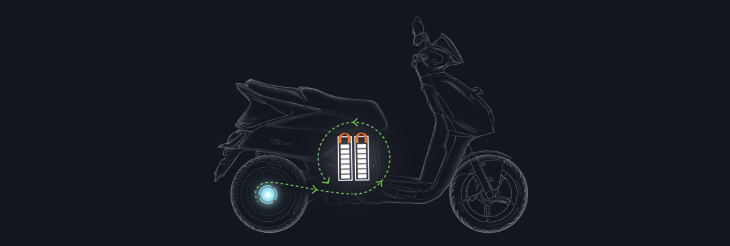
Picture yourself navigating through Mumbai's bustling traffic, constantly accelerating and braking. What if each time you slowed down, your electric scooter actually gained energy instead of wasting it? This isn't science fiction; it's the reality of regenerative braking technology that's revolutionising electric mobility in 2025.
As software-defined vehicles, electric vehicles (EVs) rely on integrated power electronics and intelligent control systems to manage energy flow. Regenerative braking is one of the clearest advantages of this architecture. In India, frequent slowing, traffic signals, and lower average speeds make energy recovery especially effective. Let’s break down how regenerative braking works.
What is Regenerative Braking?
Regenerative braking is a key innovation that allows electric vehicles to recover energy that would otherwise be lost during braking. It fundamentally changes how a vehicle decelerates. In a traditional internal combustion engine (ICE) vehicle, braking creates friction, which converts kinetic energy into waste heat. In an EV, regenerative braking captures that momentum and converts it back into stored electrical energy.
While regenerative braking dates back to the early days of electric trains, modern battery technology and advanced motor controllers have transformed it into a highly efficient system for today’s electric scooters and vehicles. In Indian driving conditions, which are characterised by frequent stop-and-go traffic, this system can recover up to 25% of the energy that would otherwise be lost, helping to extend range and improve overall efficiency.
Comparison: Traditional vs Regenerative Braking
Modern electric scooters like the VIDA VX2 Plus and VX2 Go integrate regenerative braking seamlessly with traditional mechanical brakes, ensuring both safety and efficiency for Indian road conditions.
Here's a breakdown of the key benefits of regenerative braking when compared to the traditional mechanical brakes on ICE two-wheelers:
Aspect | Traditional Braking | Regenerative Braking |
Energy Conversion | Kinetic to heat (wasted) | Kinetic to electrical (stored) |
Efficiency | 0% energy recovery | 60-70% conversion efficiency |
Maintenance | Frequent pad replacement | 50-70% less brake wear |
Range Impact | No benefit | Up to 25% range extension |
Cost Over Time | Higher maintenance | Lower operating costs |
How Regenerative Braking Works
Regenerative braking relies on the dual nature of electric motors. An electric motor can function as a drive unit (consuming electricity to spin wheels) or a generator (using spinning wheels to create electricity).
1. Reversing the Flow: When a rider releases the throttle or applies the brakes, the scooter’s electronic control unit (brain of the EV) switches the motor from 'drive mode' to 'generation mode'.
2. Magnetic Drag: The magnetic resistance required to generate this electricity creates a drag force on the wheels. This resistance provides the braking force felt by the rider, which is often described as 'engine braking'.
3. AC to DC Conversion: The motor controller manages this process by converting the generated AC power into battery-safe DC power and regulating this voltage to safely feed it back into the battery pack.
Modern systems intelligently balance regenerative and mechanical braking for smooth, safe stopping. Regeneration is most effective at moderate speeds (around 10–60 km/h), perfectly ideal for city traffic. The system is automatically limited when the battery is nearly full to avoid overcharging.
Benefits of Regenerative Braking in Electric Scooters
Regenerative braking transforms everyday slowing and stopping into a powerful efficiency advantage for electric scooters. Here’s how regenerative braking benefits electric scooters:
Benefit 1: Extended Range and Efficiency
The most immediate benefit of regenerative braking is improved range and energy efficiency. In India’s stop-and-go urban traffic, regenerative braking can extend real-world range by 15–20% by recovering energy during frequent deceleration. Practically, a commute that would normally consume 30% battery may use closer to 25% with efficient regenerative braking.
Studies indicate that regenerative braking efficiency varies based on riding patterns and conditions:
- Dense city traffic (15-25 km/h average): Up to 20% energy recovery due to frequent stops
- Suburban commuting (30-45 km/h): 12-15% recovery with moderate braking events
- Highway riding (50+ km/h): 8-10% recovery during occasional deceleration
- Hilly terrain: 25-30% recovery potential during descents
For electric scooters like the VIDA VX2 Go 3.4 kWh, regenerative braking can add usable range and improve efficiency. This is especially valuable for daily commuters and delivery riders, reducing the need for mid-day charging.
Benefit 2: Reduced Maintenance Costs
Regenerative braking significantly reduces wear on mechanical brakes, lowering long-term maintenance costs. Since the motor handles initial deceleration, physical brake pads experience significantly less wear. This translates directly to reduced maintenance costs and fewer service centre visits.
The maintenance advantages become particularly valuable in Indian conditions where dust, moisture, and heavy traffic accelerate brake wear. Consider these maintenance benefits:
- Extended brake pad life: A considerably longer lifespan compared to conventional systems
- Reduced heat stress: Lower operating temperatures preserve brake components
- Fewer replacements: Typical savings of ₹3,000-5,000 annually on brake maintenance
- Minimal downtime: Less frequent servicing means more days on the road
Benefit 3: Improved Battery Longevity and Smoother Riding Experience
Beyond immediate range benefits, regenerative braking can significantly impact battery health by reducing charge-discharge stress. Additionally, regenerative braking can enhance ride comfort with smooth, predictable deceleration that feels more controlled than abrupt mechanical braking. Riders can enjoy smoother traffic navigation while the battery benefits from constant micro-charging sessions. This smoothness also reduces rider fatigue in stop-and-go traffic by minimising frequent brake lever adjustments.
Electric Scooters Offering Regenerative Braking
Today, most electric scooters offer regenerative braking, reflecting both technological maturity and strong consumer demand for efficiency. In congested Indian cities with low average speeds and frequent stops, regenerative braking helps deliver maximum energy recovery and real-world benefits.
VIDA's entire range, from the affordable VIDA VX2 Go to premium variants such as V2 Pro, features PMSM technology, providing superior regenerative efficiency compared to basic BLDC systems. This democratisation of efficient technology makes regenerative braking accessible to diverse user segments, including students, professionals, and commercial riders.
Limitations of Regenerative Braking
While regenerative braking improves efficiency and extends range, it isn’t a perfect solution. Understanding the limitations of regenerative braking helps riders set realistic expectations about energy recovery, braking feel, and overall scooter performance in real-world conditions.
Limitation 1: Speed and Efficiency Dependencies
While regenerative braking is beneficial, its efficiency is highly dependent on real-world conditions. Energy recovery drops sharply at speeds below 10 km/h, making it far less effective in heavy, slow-moving traffic. Even under ideal conditions, only about 60–70% of kinetic energy is recovered due to motor and battery charging losses.
Battery charge level is another key constraint. When the battery is nearly full, the system reduces or disables regeneration to prevent overcharging, limiting its benefits at the start of a ride. As a result, regenerative braking delivers the most value at moderate speeds and when the battery is not fully charged, rather than in every riding scenario.
Limitation 2: Weather and Maintenance Considerations
Environmental conditions also influence regenerative braking performance. In extreme heat, which is common during Indian summers when temperatures exceed 45°C, battery management systems may restrict regeneration to protect the battery from thermal stress. Similarly, cold temperatures can reduce a battery’s ability to accept regenerative current, although this is less of a concern across most regions of India.
Wet conditions can limit regenerative braking, as safety systems often favour mechanical brakes to maintain traction. During the monsoon season, regenerative braking may be less effective. Although today’s electric scooters are built to handle wet conditions, the electronics behind regeneration need regular care, and service standards for this are still developing in India.
Despite these limitations, regenerative braking remains a game-changer, converting wasted energy into extended range and lower operating costs, making it a valuable feature for Indian riders navigating congested cities and rising fuel prices.
Takeaway…
Regenerative braking represents a remarkable advancement in electric scooter technology, offering tangible benefits for Indian riders through extended range, reduced maintenance, and improved efficiency. While not a complete solution to all EV challenges, this technology meaningfully enhances the ownership experience by converting wasted energy into valuable kilometres.
Discover the future of efficient urban transportation with VIDA electric scooters, featuring sophisticated regenerative braking systems designed for Indian roads.
FAQs
1. What exactly is regenerative braking, and how does it differ from regular braking?
Regenerative braking recovers a vehicle’s kinetic energy during deceleration, converting it into electricity stored in the battery. Unlike traditional brakes that waste energy as heat, it captures 60–70% of this energy by reversing the motor’s function, turning it into a generator while coasting or braking.
2. Does regenerative braking work at all speeds?
Regenerative braking works best at 10–60 km/h, ideal for city commuting. Below 10 km/h, there’s little energy to recover, so mechanical brakes take over, while at speeds above 70 km/h, the motor can’t efficiently handle all the generated current. This makes it well-suited for typical Indian urban traffic.
3. Can regenerative braking damage the battery?
No, modern regenerative braking systems use advanced battery management to ensure safety. They reduce or stop energy recovery when the battery is nearly full and limit regeneration in extreme temperatures. With proper design and maintenance, these safeguards make regenerative braking safe for long-term battery health.
4. What happens to regenerative braking in wet weather?
In wet conditions, safety systems reduce regenerative braking to maintain traction, relying more on mechanical brakes. While IP67/IP68-rated scooters remain safe, energy recovery can drop 20–30% in heavy rain, balancing safety with some continued efficiency.
5. How often does a regenerative braking system need servicing?
Regenerative braking requires minimal maintenance, with no wear parts such as pads. Regular software updates and annual diagnostics keep the motor, controller, and battery system running optimally. Unlike mechanical brakes, these components typically last the vehicle’s lifetime, with many manufacturers offering over-the-air updates for added convenience.