How to Choose a Budget Electric Scooter in India (2026)
Published by VIDA
Read Time: 2 min 30 sec
Date: 23rd June 26
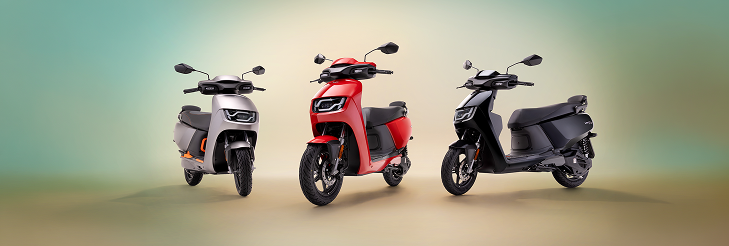
India registered over 1.4 million electric two-wheelers in FY2025–26, a 21.8% increase over the previous year. With low running costs per kilometre and expanding charging networks, more buyers than ever are evaluating a budget electric scooter as a genuine daily commuter.
Not every affordable electric scooter delivers the same value over three to five years of daily riding. Running cost, charging flexibility, warranty coverage, and after-sales support vary widely across models in the same price band.
What Defines a Good Budget Electric Scooter?
A good budget electric scooter balances upfront cost with long-term ownership advantages: reliable range for your commute, low per-kilometre running costs, flexible charging, and after-sales support from a manufacturer you can reach. In India, this segment spans ₹50,000 to ₹1,20,000 (ex-showroom, before subsidies). The table below shows how to distinguish value from a low price tag.
| Value Indicator | What to Look For | Red Flag |
| Certified range | IDC or ARAI certified figure above 80 km | Only "real-world" claims with no certified standard |
| Battery warranty | 3 years or more as standard | Warranty under 2 years or excludes degradation |
| Charging flexibility | Removable battery, home socket compatible, fast charging option | No home-charging option |
| Service network | Manufacturer-backed centres in your city | Online-only support, no physical service points |
A low-budget electric scooter from an unproven manufacturer may save you ₹10,000 upfront, but cost far more in out-of-warranty repairs and unreliable service within two years.
Key Features to Check Before Buying a Budget Electric Scooter
Five features separate a smart purchase from a regrettable one. Each directly affects how much the scooter costs to own and how reliably it serves your daily routine.
Certified range (IDC or ARAI): A scooter with a 90+ km certified range comfortably handles a 15–20 km one-way commute, with room for errands. Models like the VIDA VX2 Go publish certified figures you can benchmark against.
Battery type and warranty: Lithium-ion is standard. Check whether the warranty covers both failure and performance degradation (measured by State of Health). Three years is the baseline.
Charging method flexibility: Scooters with removable batteries let you charge them using any standard 5A home socket. This is a practical advantage for apartment dwellers in Bengaluru, Hyderabad, and Pune.
Ride modes: Eco mode stretches range in congested traffic, whereas Sport mode handles open stretches. Multiple modes let you adapt the scooter to your ride.
IP-rated weather protection: An IP67 or IP68 rating on the motor and battery gives you confidence during monsoons and on flooded streets.
How to Evaluate Price, Range, and Running Costs
The ex-showroom price is only the entry point. A budget electric scooter's real value shows up in its per-kilometre running cost, annual maintenance bill, and charging expense over three to five years.
| Ownership Cost Factor | What to Expect |
| Running cost per km | ₹0.15–0.30 (home charging at domestic tariff) |
| Full charge cost | ₹10–25 per charge (standard 5A home socket) |
| Annual maintenance | ₹2,000–5,000 (no engine oil, no air filter, fewer moving parts) |
| Insurance (annual) | ₹1,500–2,500 |
| PM E-DRIVE subsidy (2026) | Up to ₹5,000 per vehicle (extended through July 2026) |
The PM E-DRIVE subsidy of ₹2,500 per kWh (capped at ₹5,000 per vehicle) applies to models priced under ₹1,50,000 ex-factory. Use a tool like the VIDA savings calculator to estimate your specific ownership costs based on daily distance and electricity rates.
For a rider covering 30 km daily, the running cost works out to roughly ₹5–9 per day. Annual maintenance costs remain low because electric scooters have fewer moving parts and require no oil changes or belt servicing. Tracking your commute against the certified range is the simplest way to forecast long-term costs.
Tip: Before you finalise a model, check its resale demand in your city. Electric scooters from manufacturers with wide dealer networks tend to hold value better because the next buyer knows servicing will be accessible. Also, pay attention to OTA (over-the-air) update support. A scooter that receives software improvements after purchase gains features and efficiency without a showroom visit. Both factors affect the long-term return on your investment in ways that the spec sheet does not capture. |
How to Choose a Budget Electric Scooter for Daily Commutes
Match the scooter's certified range to at least twice your one-way commute distance. A scooter with a certified range of 90+ km covers a full working week on two to three charges. For longer routes, such as the 15 km average for Bengaluru's IT corridor, a model with 142 km certified range (like the VIDA VX2 Go 3.4 kWh) provides a comfortable margin.
Charging flexibility matters as much as range. If you live in an apartment without a dedicated parking charger, a scooter with a removable battery that charges at a standard 5A home socket solves the problem entirely. Stop-and-go city traffic in Eco mode can extend range through regenerative braking, so urban riders often find real-world performance close to the certified figure.
Common Mistakes to Avoid When Buying an Affordable Electric Scooter
Buying on price alone, ignoring warranty fine print, skipping a test ride, and overlooking after-sales support are the four mistakes that cost budget EV buyers the most.
Choosing the cheapest option without checking the total ownership cost: A scooter priced ₹15,000 lower but with a shorter battery warranty or limited spare-part availability can end up costing more within two years.
Ignoring warranty terms: A 5-year vehicle warranty with a 3-year battery warranty is a reasonable baseline. If the manufacturer offers an opt-in extended battery plan, that signals confidence in durability.
Skipping the test ride: Acceleration response, braking feel, and seat ergonomics differ across models. A 15-minute test ride reveals fit issues no spec sheet can communicate.
Not checking the service network: Confirm that the manufacturer has authorised service centres near your home or office. A strong parent-company dealer network reduces service turnaround times and improves access to spare parts.
Key Takeaways
A budget electric scooter is a three- to five-year ownership decision, not a one-time transaction. The right choice depends less on the showroom price and more on how the scooter performs against your daily commute, your charging setup, and your long-term cost expectations.
Start with the certified range (aim for at least twice your one-way commute distance), confirm that the battery warranty covers degradation over three years or more, and verify that the manufacturer's service network is accessible in your city. Once those boxes are checked, book a test ride and let the riding experience confirm what the numbers already tell you.
FAQs
1. How do I choose the right budget electric scooter in India?
Start by matching the scooter's certified range (IDC or ARAI) to twice your daily one-way commute distance. Then compare running cost per kilometre, battery warranty terms, and service network availability in your city. Total ownership cost over three to five years matters more than the ex-showroom price.
2. What features matter most in a low-budget electric scooter?
Certified range, battery warranty (covering degradation, not just failure), charging flexibility with a removable battery, ride modes for city and open-road use, and IP-rated weather protection are the five features that have the greatest impact on the daily ownership experience.
3. How much range is enough in a budget electric scooter for daily use?
For most Indian urban commuters who travel 10–15 km each way, a certified range of 90–100 km provides comfortable daily coverage with a margin for errands. Riders with longer commutes (20+ km each way) should look for an electric scooter with a certified range of 140+ km.
4. Are budget electric scooters good for long-term savings?
Electric scooters in the budget segment deliver measurable long-term savings. Running costs range from ₹0.15 to ₹0.30 per km, and annual maintenance costs range from ₹2,000 to ₹5,000 due to fewer moving parts. Over five years, a rider commuting 30 km daily spends roughly ₹5–9 per day on charging, keeping total ownership costs well below what most urban commuters are used to spending on daily transport.
5. What warranty should I expect with a budget electric scooter?
A reliable manufacturer offers at least a 3-year vehicle warranty and a separate battery warranty of at least 3 years. Opt-in extended battery plans covering performance degradation (State of Health below 70%) provide additional long-term confidence. The warranty's transferability also protects resale value.