Electric Scooter Features and Warranty: What You Should Know
Published by VIDA
Read Time: 1 min 30 sec
Date: 29th June 26
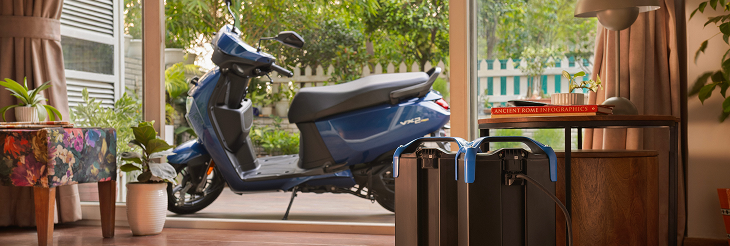
India now has over 29,000 public EV charging stations, a number that has grown significantly in recent years. For riders in cities such as Mumbai, Bengaluru, and Chennai, access to charging is no longer the barrier it was two years ago. The decision now depends on the electric scooter itself.
Which features protect your investment over five years? How does warranty coverage affect real ownership costs? Plus, what should you check beyond the spec sheet? Here’s a feature-by-feature breakdown so that you can choose the best electric scooter for your needs.
What Makes Electric Scooters a Popular Choice in India?
Electric scooters have gained traction across Indian cities because they save on fuel, handle congested roads well, and now have access to far more charging points than even two years ago. For riders in Bengaluru, Pune, and Hyderabad, the practical benefits are clear enough to influence a purchase decision.
Growing Demand for Electric Mobility
India's electric two-wheeler segment accounted for 6.54% of all two-wheeler registrations in FY2026. While penetration remains in single digits, year-on-year growth continues to accelerate, driven by broader model availability and improved charging infrastructure.
Benefits for Daily Urban Commuting
For a rider covering 30–40 km daily, an electric scooter costs a fraction of what a fuel-powered commute does. Lower running expenses, quieter rides, and compact footprints for city parking make electric scooters practical for the short, frequent trips that define Indian urban commutes.
Evolving EV Infrastructure in India
India now has many public EV charging stations. Several manufacturers also run their own fast-charging networks across hundreds of cities. For urban buyers, range concerns are smaller today than they were even two years ago.
Key Features to Look for in an Electric Scooter
The electric scooter features worth prioritising fall into four categories. Battery technology, smart connectivity, display quality, and safety ratings affect your daily experience and total cost of ownership over three to five years.
Battery Technology and Range
Lithium-ion batteries are standard across most electric scooters in India. The two variables that matter for daily use are capacity (measured in kWh) and whether the battery is removable. A removable battery allows you to charge at any standard 5A household socket without depending on a dedicated parking-level charger. All VIDA EVooters, for instance, use a removable-battery configuration.
Smart Connectivity Features
Bluetooth-enabled scooters that pair with a companion app let you track ride data, monitor battery health remotely, and receive over-the-air (OTA) software updates. These reduce workshop visits and keep the scooter's software current without manual intervention.
Navigation and Digital Displays
Turn-by-turn navigation on a built-in TFT or LCD display removes the need to mount a phone on the handlebars. Display size varies across models, from 4.3-inch LCD clusters to 7-inch TFT touchscreens, and the quality of the interface affects how quickly you can switch ride modes or check battery status mid-ride.
Safety Features
Look for IP67 or IP68 ratings on the battery and motor casing. These certify dust and water resistance, which matters especially during monsoon months. Other safety features to check include crash and fall alerts, geofencing, remote immobilisation, and over-speed notifications.
Understanding Electric Scooter Warranty Benefits
An electric scooter battery warranty is the most important ownership safeguard you can evaluate before buying. The battery is the costliest single component, and its health directly determines performance and resale value. Standard manufacturer coverage typically runs 3 years or 30,000 km. Extended battery warranty plans push coverage to 5 years or 60,000 km, protecting against both failure and performance degradation.
These are the key details to check:
State of Health (SoH) threshold: Warranty plans that trigger at 70% SoH or below cover gradual degradation, not just outright failure.
Transferability: A warranty that transfers to a new owner strengthens your position at resale.
Purchase window: Some extended plans must be bought within 180 days of the scooter's purchase. Missing this window closes the option.
Good battery health practices also complement warranty coverage by reducing degradation over time.
Ownership Experience Beyond the Purchase
Maintenance of an electric scooter is simpler than most first-time buyers expect. With no engine oil, spark plugs, or clutch assemblies to service, annual upkeep typically costs between ₹1,500 and ₹6,000, depending on the brand and model. Routine maintenance focuses on tyres, brakes, and periodic software diagnostics.
Models like the VIDA VX2 Go offer app-based vehicle diagnostics, ride history, and remote alerts. These tools help you catch issues early and avoid unnecessary service visits.
What Affects Electric Scooter Resale Value in India?
Resale value for electric scooters in India is driven primarily by battery condition, warranty status, and brand trust. Unlike fuel-powered two-wheelers, where engine mileage is the main depreciation factor, an electric scooter's battery health determines how much value it retains over time.
| Factor | Impact on Resale |
| Battery SoH above 80% | Retains stronger pricing; buyers trust verified battery condition. |
| Remaining warranty | Transferable warranty adds measurable value at point of sale. |
| Brand and service network | Established manufacturers with wide service reach hold value better. |
| Documented service history | App-logged diagnostics and service records reduce buyer hesitation. |
| OTA update support | Scooters that receive software updates remain functionally current longer. |
How to Evaluate Long-Term Value Before Buying
Long-term value requires looking past the showroom price. A scooter that costs less upfront but lacks extended warranty options or depreciates quickly may cost more over five years than a slightly pricier model with stronger ownership advantages.
Run these numbers before deciding.
Charging cost per km over your average annual distance (10,000–12,000 km for most urban riders).
Annual maintenance estimate based on the manufacturer's service schedule.
Warranty extension cost versus the price of an out-of-warranty battery replacement.
Depreciation estimate after 3 years, factoring in battery warranty coverage.
Tools like the VIDA savings calculator can help you compare these figures against your current commute costs.
Why Long-Term Value Matters When Choosing an Electric Scooter
Choosing an electric scooter based on features alone misses the bigger picture. The scooter you ride in year one should still feel reliable, efficient, and well-supported in year four. That's why long-term value, not just the spec sheet, should shape your decision.
A few ownership factors make this concrete. A standard 5-year/50,000 km vehicle warranty paired with a 3-year/30,000 km battery warranty gives you a baseline. But an opt-in plan that extends battery coverage to 5 years or 60,000 km, with full transferability to a second owner, adds real financial protection at resale. VIDA, powered by Hero MotoCorp, offers exactly this structure across its lineup.
Charging flexibility also compounds over time. A scooter that supports three charging methods (direct vehicle charge, removable battery at a standard 5A home socket, and a fast-charging network) lets you adapt to changing living situations without infrastructure upgrades. The VIDA VX2 Plus, for example, pairs this flexibility with a 4.3-inch TFT display, turn-by-turn navigation, crash alerts, and OTA updates. These are the kind of features that keep a scooter useful and current well beyond the first year of ownership.
Key Takeaways
The features that matter most in an electric scooter aren't the ones that look impressive in a showroom. They're the ones that hold up after three years of daily use. Battery type, warranty depth, connected diagnostics, and IP-rated build quality determine whether your scooter stays reliable or turns into an expensive problem.
Before you visit a dealer, calculate your five-year cost of ownership, check whether the battery warranty is transferable, and confirm the scooter receives regular OTA updates. Those three steps will narrow your shortlist faster than any spec comparison ever could.
FAQs
1. What features should I look for in an electric scooter?
Prioritise battery capacity and type (removable lithium-ion is the most flexible), IP ratings for dust and water resistance, smart connectivity with app integration, a display with turn-by-turn navigation, and multiple ride modes. Safety features like crash alerts, geofencing, and remote immobilisation add meaningful everyday value.
2. What does an electric scooter warranty typically cover?
A standard electric scooter battery warranty covers manufacturing defects and premature cell failure, usually for 3 years or 30,000 km. Extended plans may also cover performance degradation triggered when the battery's State of Health drops below 70%. Always check whether the warranty is transferable to a second owner.
3. How much maintenance does an electric scooter need?
Electric scooters require less frequent servicing than fuel-powered scooters. With no engine oil, spark plugs, or clutch components, annual maintenance typically focuses on tyres, brakes, and software diagnostics. Most riders spend between ₹1,500 and ₹6,000 per year on upkeep, depending on usage and the model.
4. Do electric scooters have good resale value in India?
Resale value is improving as the market matures, but it depends heavily on battery health, remaining warranty, and brand reputation. Scooters from manufacturers with established service networks and transferable warranty plans tend to hold their value better than those from newer, less proven brands.
5. What factors affect the long-term value of an electric scooter?
The primary factors are battery degradation rate, warranty coverage (standard and extended), annual maintenance costs, charging infrastructure access, and OTA software update support. A scooter that receives regular updates, carries strong warranty protection, and maintains battery health above 80% SoH retains the most value over time.