What Is EV Charging? A Complete Beginner's Guide to Electric Vehicle Charging
Published by VIDA
Read Time: 1 min
Date: 2nd July 26
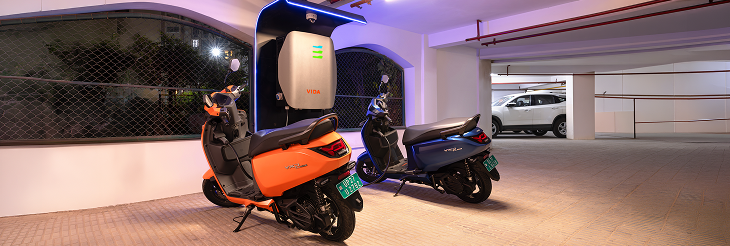
Recent data shows that electric vehicles accounted for 8% of all new vehicle registrations in India, crossing 2.3 million units for the year. With adoption climbing across Bengaluru, Mumbai, Delhi, and dozens of Tier 2 cities, one question keeps coming up for first-time buyers: What is EV charging, and how does it actually work?
From the types of charging and home setup to public stations and real charging times, here’s what you need to know.
Understanding EV Charging: The Basics
EV charging is the process of transferring electrical energy from an external power source to the rechargeable battery inside an electric vehicle. You plug the vehicle (or a removable battery) into a power outlet, and electricity flows into the battery cells.
Every EV comes with an onboard charger. This onboard charger has its own power rating, which determines the maximum charging speed your vehicle can accept, regardless of how powerful the external station is.
The Three Types of EV Charging Explained
EV charging falls into three categories, each suited to a different speed and use case. The right type depends on where you are, what vehicle you own, and how quickly you need a top-up.
Level 1 Charging: Your Standard Home Outlet
Level 1 charging uses a regular household socket and delivers power at roughly 0.5–2.5 kW. For electric two-wheelers with smaller batteries (2–4 kWh), this is perfectly adequate for overnight charging. It is the slowest method, but it requires no additional equipment.
Level 2 Charging: The Sweet Spot for Most EV Owners
Level 2 uses a dedicated AC wall charger (typically 3.3–7.4 kW) and charges significantly faster. This is the standard at workplace parking lots, residential complexes with dedicated EV outlets, and slower public AC stations. Most four-wheeler owners and riders with longer daily commutes prefer Level 2 for routine use.
DC Fast Charging: Rapid Charging for Highway Travel
DC fast chargers deliver 25–150 kW and can add substantial range in under an hour. They are positioned along highways, at fuel retail stations, and at commercial hubs. For two-wheelers, dedicated DC fast chargers are still limited, but the network is expanding under the PM E-DRIVE scheme.
Most EV owners in India rely on a combination of Level 1 home charging for daily use and occasional visits to public charging stations for top-ups.
| Did You Know? |
| Your electric vehicle's onboard charger has its own power rating, separate from the charging station's output. The actual charging speed is always limited to the lower of the two ratings. A 7.4 kW wall charger connected to a scooter with a 1.5 kW onboard charger will only deliver 1.5 kW. Matching your charger to your vehicle's onboard capacity matters more than chasing the highest-wattage station. For two-wheelers with 2–4 kWh batteries, a standard home socket paired with the OEM charger is usually the most practical setup. Save fast-charging DC for travel days or urgent top-ups, and let overnight home charging handle the daily routine. Checking your vehicle's onboard charger spec is the simplest way to set realistic expectations. |
How Does EV Charging Actually Work?
The charging process starts the moment you connect your vehicle to a power source. The charger and the vehicle communicate briefly to confirm compatibility and safe operating limits. Once that handshake is complete, electricity begins flowing into the battery cells.
EV charging uses either alternating current (AC) or direct current (DC). AC from the grid gets converted to DC inside the vehicle by the onboard charger. DC fast chargers skip that conversion and feed power straight into the battery, which is why they charge faster. In both cases, the BMS continuously adjusts the charging rate to keep cell temperature and voltage within safe limits.
Charging Your EV at Home in India
Home charging is the most practical daily option for Indian EV owners, especially for two-wheeler riders covering 20–40 km on a typical city commute. Most electric two-wheelers come with a portable charger that plugs directly into a standard household socket, requiring no special wiring or upgrades.
VIDA, powered by Hero MotoCorp, takes this flexibility further with three distinct charging methods across its lineup. You can charge your scooter by plugging the cable directly into it, or by detaching the removable battery, carrying it indoors, and charging it at any standard 5A household socket. The same socket works for both the vehicle and the detached battery, with no extra adaptor needed. The VIDA VX2 Plus, for instance, uses dual removable battery packs that can be charged at home while the scooter stays parked.
Safe home charging comes down to a few essentials:
Use only the manufacturer's charger. Third-party chargers can damage battery cells and void warranty coverage.
Ensure proper earthing. A functioning earth connection is non-negotiable. Most portable chargers will not start without it.
Avoid extension cords. Plug directly into a wall socket, as long extension leads can overheat under sustained load.
Charge in a ventilated space. Good airflow helps manage heat, particularly during the summer months.
Using Public Charging Stations in India
India's public EV charging network has expanded rapidly, supported by the PM E-DRIVE scheme. The central government has provided ₹2,000 crore for 72,300 new stations across 50 national highway corridors. Public chargers are now available at fuel retail outlets, metro stations, malls, and highway rest stops in most major cities.
To use a public station, locate it via a charging network app, scan the QR code, and plug in. Payment is handled through UPI, debit card, or the operator's app wallet.
For electric scooter riders, VIDA offers access to a fast-charging network of 5,600+ stations across 415 cities. All VIDA models are compatible with this charging infrastructure, with a full charge taking approximately 62 minutes at a fast-charging point.
EV Charging Connectors and Standards in India
India follows Bureau of Indian Standards (BIS) connector specifications, which vary by vehicle category. For two- and three-wheelers, the Bharat AC-001 standard specifies slow AC charging up to 3.3 kW. Bharat DC-001 handles low-power DC charging at up to 15 kW for lighter vehicles.
For four-wheelers, Type 2 (Mennekes) is the AC standard, while CCS2 handles DC fast charging. Every modern electric car sold in India uses a CCS2 port, which also accepts a Type 2 plug for AC sessions.
| Standard | Type | Power Range | Used For |
| Bharat AC-001 | AC slow | Up to 3.3 kW | Two-wheelers, three-wheelers |
| Bharat DC-001 | DC | Up to 15 kW | Light EVs, e-rickshaws |
| Type 2 (Mennekes) | AC | 7–22 kW | Four-wheeler home and public AC |
| CCS2 | DC fast | 25–350 kW | Four-wheeler DC fast charging |
| LECCS Type 6/7 | AC/DC combo | Up to 12 kW | Newer two-wheeler fast charging |
Confirm your vehicle's port type before relying on a specific public station. Industry collaboration is also shaping the next phase of light EV charging in India. The Light Electric-Vehicle Acceleration Forum (LEAF) brings together vehicle manufacturers, charging operators, component suppliers, and technology providers to build shared standards and improve charger compatibility across brands.
VIDA is also a member of this initiative. LEAF's first focus area is LECCS, a standard designed specifically for light electric vehicles. BIS has already approved it as part of India's national standards framework. As this standard gains adoption, more public chargers will work with more vehicles, regardless of which brand you ride.
Charging Time: How Long Does It Take?
Charging time depends on three factors: battery capacity (measured in kWh), charger power output, and the vehicle's onboard charger rating. Smaller two-wheeler batteries (2–4 kWh) charge faster than larger four-wheeler packs (30–60 kWh), even on the same charger type.
For electric two-wheelers, a typical full charge at home takes 4–6 hours overnight. At a DC fast-charging station, the same battery can reach 80% in under an hour. Charging to 80% is widely recommended, as battery chemistry slows significantly in the final 20%, and regular 80% targets help maintain long-term battery health.
Temperature also plays a role. Lithium-ion cells perform best between 15°C and 35°C, and charging speeds may dip during peak summer or extreme cold.
Conclusion
EV charging is a straightforward process once you understand the basics. For most Indian urban commuters, especially two-wheeler riders, the daily routine is as simple as plugging in at home before bed and waking up to a full battery. Public stations handle longer rides and quick top-ups.
The infrastructure is growing, standards are maturing, and the options available to Indian EV owners are stronger than ever. Knowing how charging works puts you in control of the ownership experience from day one.
FAQs
1. Can I charge any EV at any charging station?
Not always. Compatibility depends on your vehicle's connector type and the station's offerings. Two-wheelers and four-wheelers use different ports, so check whether the station supports your specific standard (Bharat AC-001, CCS2, Type 2, or LECCS Type 6/7) before plugging in.
2. What happens if my EV runs out of charge on the road?
If your battery drops to zero, the vehicle will gradually lose power and come to a stop. Pull over safely, switch on your hazard lights, and contact your vehicle manufacturer's roadside assistance helpline. Most EV brands offer towing to the nearest charging station or service centre. Keeping your battery above 10–15% on longer rides is the simplest way to avoid this situation entirely.
3. Does fast charging damage the EV battery?
Occasional DC fast charging does not cause significant harm. Frequent, exclusive reliance on fast charging over months can increase heat stress on cells, which may accelerate gradual capacity loss. Home charging at slower speeds is gentler for daily use.
4. Can I install an EV charger in my apartment parking space?
Yes, most apartment residents can get an EV charger installed in their parking spot by coordinating with their housing society and local electricity provider. If your two-wheeler uses a standard portable charger, you may not need a dedicated installation at all, since you can simply remove the battery and charge it at any household socket indoors.
5. Is EV charging safe in rain or wet conditions?
Yes. Modern EVs carry ingress protection ratings (IP67 or IP68 for batteries) that guard against water and dust. Chargers also have built-in safety mechanisms. Standard precautions apply: avoid submerged sockets and ensure your home charging area has proper drainage.
6. How do I pay for charging at public stations in India?
Most public charging networks accept UPI, debit or credit cards, and operator-specific app wallets. Some stations support RFID cards too. Payment is calculated per kWh of electricity consumed, displayed on the station screen or within the operator's app.
7. Can I use a regular extension cord to charge my EV?
This is not recommended. Standard household extension cords are not rated for the sustained load that EV charging draws over several hours. They can overheat, damage wiring, or pose a fire risk. Always plug the manufacturer-provided charger directly into a wall socket with proper earthing. If your socket is too far from where you park, consult an electrician about installing a closer dedicated outlet.
8. How can I maximise my EV's battery life through smart charging?
Charge to 80% for daily use instead of topping up to 100% every time, as this reduces stress on lithium-ion cells. Avoid letting the battery drain below 15–20% regularly. Charge overnight using the OEM charger at home, and reserve DC fast charging for travel days or urgent situations. Park in shade during summer to keep battery temperature lower, since sustained heat accelerates cell degradation over time