Electric Scooter Range in Delhi: Traffic, Charging & Commute Reality
Published by VIDA
Read Time: 1 min 30 sec
Date: 29th June 26
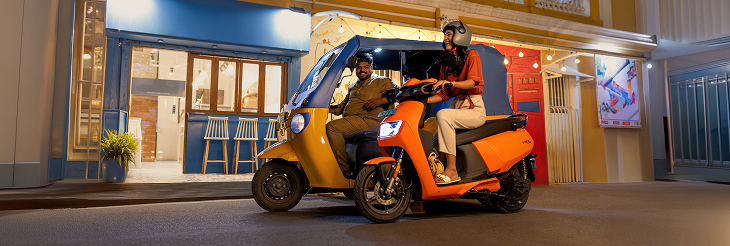
Delhi is adopting electric mobility faster than ever. The shift isn’t subtle anymore. It’s happening on every street, in every parking lot, and during every office rush hour. In late 2024, vehicular emissions accounted for 51.5% of Delhi's air pollution. Reflecting the growing shift toward cleaner transportation, the city registered 107,000 EVs in 2025–26, up from 83,512 in 2024–25. Delhi now holds a 12% EV share in vehicle sales, the highest in India.
As more riders explore electric mobility, one question keeps coming up: What range can you actually expect on an electric scooter in Delhi traffic? After all, brochure figures are one thing. Real roads are another.
Let's break down the reality of electric scooter range in Delhi and what it means for everyday commuting.
Why Are Electric Scooters Popular In Delhi?
Delhi has emerged as one of India's leading electric mobility markets. The proposed Delhi EV Policy 2.0 targets 95% EV penetration in new vehicle registrations by 2027 and 98% by 2030, with purchase subsidies of up to ₹30,000 for eligible two-wheeler EVs.
But affordability is only part of the story. Electric scooters fit naturally into Delhi's commuting patterns, offering practical range, convenient charging, and low running costs.
For instance, VIDA runs at approximately ₹0.17/km, which is a strong proposition for anyone looking at the electric scooter price in Delhi alongside running costs.
What Does Electric Scooter Range Mean?
When people talk about an electric scooter's "range", they usually mean the total distance a scooter can travel on a full battery charge.
You have probably seen scooters claiming 120 km, 140 km, or even 165 km of range. For context, the VIDA V2 Pro has a 165 km IDC-certified range*.
However, real-world riding conditions are different. Most electric scooters deliver around 70–80% of their certified range in everyday riding conditions.
For example:
A scooter with a certified range of 140 km may realistically deliver around 100–112 km.
A scooter with a certified range of 165 km may achieve approximately 115–132 km in real-world use.
That's why understanding both certified and real-world electric scooter range is important when comparing different models.
Electric Scooter Range in Delhi: What Can You Expect?
The answer depends on how and where you ride. A typical Delhi commute includes everything from congested roads to smoother stretches, so real-world range naturally varies.
Real-World vs Claimed Range
Certified range figures offer a useful benchmark. In everyday Delhi conditions, however, a scooter with a certified range of 140–165 km typically delivers around 95–130 km, depending on traffic, riding mode, load, and route.
Typical City Usage Patterns
Most Delhi office-goers travel around 30–40 km a day. With an IDC-certified range of up to 165 km and a typical real-world range of around 115–132 km (depending on riding conditions), the VIDA V2 Pro can comfortably handle 2–3 days of commuting on a single charge.
Here's the best part. Regenerative braking helps recover energy while slowing down, making stop-start city traffic work a little more in your favour. It's one of the many smart features available across VIDA's range.
How Traffic Conditions in Delhi Affect Electric Scooter Range
Stop-Start Traffic Impact
Delhi's roads are often defined by traffic signals, busy junctions, and peak-hour congestion. In 2025, the city's average congestion level reached 60.2%, with a 10km journey taking around 24 minutes. Frequent acceleration and braking in these conditions can affect the electric scooter's range compared to smooth, uninterrupted riding.
Idle Time and Battery Usage
Here's where electric mobility has an advantage. Electric scooters consume virtually no energy while stationary, whether you're waiting at a signal or moving through slow traffic.
Daily Commute in Delhi: Is the Electric Scooter's Range Sufficient?
Average commute distances
Delhi-NCR has an average one-way commute of 20 km. That is a 40 km round trip. Even the most affordable VIDA model, the VX2 Go 2.2 kWh (92 km certified range*), covers this with significant headroom at an estimated 65–74 km real-world range.
Suitability for office travel
Even the best electric scooters in Delhi can influence the range due to these real-world factors:
| Factor | Range Impact | What Helps |
| Stop-start traffic | 15–25% | ReGen braking |
| High temperatures | 8–12% | Shade parking |
| Aggressive riding | 25–35% | Eco mode |
| Extra load | 2% per 10 kg | Travel light |
| Flyovers & headwinds | 10–20% | Efficient routes |
Factors That Affect Electric Scooter Range in City Conditions
The range is not fixed. It changes with how you ride and where you ride.
Rider weight: Extra load increases energy use
Mode: Eco mode improves efficiency; higher modes reduce it
Road conditions: Smooth roads improve range, and uneven roads reduce it
Riding style: Smooth acceleration helps maximise efficiency
Weather: Extreme heat can slightly affect battery performance
Small steps can make a noticeable difference.
Charging Needs Based on Range and Daily Usage
One of the biggest surprises for new EV riders is how rarely they need to charge.
For a typical 40 km daily commute, many riders only need to recharge every 2 to 3 days.
What's more, Delhi already has 8,849 charging points, with the infrastructure continuing to expand across the city. The EV tariff for charging points in Delhi is ₹4.5 per unit (excluding taxes).
Home charging remains the most convenient option, and removable batteries make it even simpler by allowing charging through any standard 5A socket.
Need a quicker top-up? VIDA's fast-charging network spans 5,600+ stations across 415 cities, delivering a full charge in approximately 62 minutes.
Tips to Improve Electric Scooter Range in Delhi Traffic
A few simple practices can help riders maximise efficiency:
Use Eco mode for regular commuting
Maintain the recommended tyre pressure
Accelerate smoothly
Avoid carrying unnecessary weight
Take advantage of regenerative braking
Plan routes to avoid excessive congestion where possible
Key Takeaways
Real-world electric scooter range in Delhi is typically 70–80% of the certified range.
Stop-start traffic can affect range, but zero idle energy consumption and regenerative braking help improve efficiency.
A typical 40 km daily commute falls comfortably within the real-world range of modern electric scooters.
For many riders, charging every 2 to 3 days is sufficient, making everyday ownership practical and convenient.
As electric mobility grows across Delhi, range is becoming a confidence factor rather than a concern.
FAQs
1. What is the real range of an electric scooter in Delhi traffic?
Most electric scooters deliver approximately 70–80% of their certified range in real-world conditions. Actual range depends on traffic, rider load, riding mode, and road conditions.
2. Does heavy traffic reduce electric scooter range?
Yes. Frequent acceleration and braking can increase energy consumption. Models with regenerative braking, like VIDA EV Scooters, recover energy during deceleration, further offsetting the impact.
3. Is an electric scooter suitable for daily commuting in Delhi?
Yes. With average Delhi-NCR commutes of around 40 km per day, modern electric scooters typically offer enough range for several days of riding between charges.