Electric Scooter Buying Guide for Indian Riders in 2026
Published by VIDA
Read Time: 2 min
Date: 23rd July 26
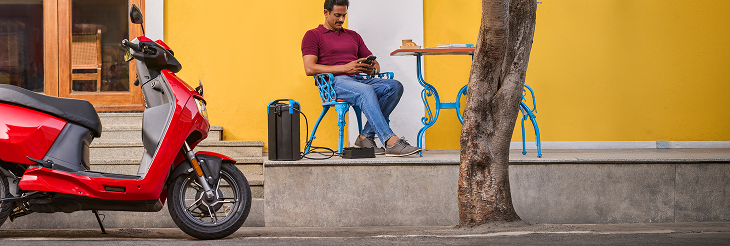
Electric two-wheeler registrations in India grew by approximately 21% in FY2026. More models, more variants, and more charging networks have entered the market in the past few months than in any previous year.
But with so many options, it can be challenging to find which electric scooter actually fits your needs. Claimed ranges vary from what you actually get on city roads. Battery setups range from single fixed packs to dual removable ones. The 10 key checks ahead give you a clear framework for evaluating any electric scooter on Indian roads.
Why This Electric Scooter Buying Guide Matters for Indian Riders
EV penetration crossed 8.5% of total automobile sales in FY2025-26, and the electric scooter segment has moved well past early-adopter territory. Indian riding conditions add variables that spec sheets alone cannot capture. Monsoon waterlogging tests how well a scooter's motor and battery are sealed. Potholed roads stress suspension. Apartment living demands a scooter whose battery can be charged indoors. Each check on this list addresses one of these realities.
1. Real-World Range vs Claimed Range – Calculate What You Actually Need
Claimed (IDC) range and the kilometres you ride on city roads are rarely the same. Terrain, rider weight, pillion load, and ride mode all reduce the number, sometimes by 20–30%.
Start by mapping your actual daily commute. Most urban Indian commuters travel under 10 km each way. A scooter delivering 80–100 km of real-world range handles a full day of riding and errands on a single charge. Understanding how range figures are tested will help you compare models on equal terms.
2. Battery Type, Capacity, and Lifespan – Know What Powers Your Ride
Every electric scooter in India runs on lithium-ion cells, but the way those cells are packaged makes a real difference. Some models use a single fixed battery. Others use dual removable packs that you can pull out and carry indoors.
Removability is especially useful if you live in a flat without a charging point in the parking area. A removable battery plugs into a standard 5A home socket, so you can charge it in your kitchen or balcony. When comparing models, check the manufacturer's battery health warranty, and find out whether extended battery coverage is available.
3. Charging Time and Infrastructure – Can You Actually Charge It?
How well charging fits your routine depends on factors such as home charging duration, whether you can charge the battery separately from the vehicle, and the availability of fast-charging stations near your office or regular commute.
Home charging times range from under 3 hours for smaller packs to over 5 hours for higher-capacity batteries. Models with removable batteries, including the VIDA VX2 Go 3.4 kWh, let you carry the pack indoors and charge at any household socket. On the public infrastructure side, India has nearly 27,737 EV charging stations installed, with coverage growing steadily across Tier 1 and Tier 2 cities.
4. Total Cost of Ownership: Beyond the Showroom Price
The purchase amount is only part of what you will spend over the life of the scooter. Maintenance frequency, consumable part replacement, and battery warranty duration all affect your long-term ownership experience. Electric scooters generally have fewer moving parts than conventional two-wheelers, which translates to longer service intervals and lower routine upkeep.
How to Calculate Your 5-Year Ownership Value
Start with the warranty structure. A scooter with a 5-year/50,000 km vehicle warranty and a 3-year/30,000 km battery warranty gives you a clear coverage window. If extended plans are available (some manufacturers offer battery coverage up to 5 years/60,000 km and component coverage up to 5 years/75,000 km), factor those in. Transferable warranty plans also support resale value, because the next owner inherits the remaining coverage.
| Tip: You can download and test the scooter's companion app on your own phone during your dealership visit. Ask the staff to pair it with the display unit so you can check whether navigation, ride history, and crash alert features work smoothly on your specific device and operating system (OS) version. This five-minute check at the showroom can save you from discovering a compatibility issue later. |
5. Motor Performance and Power – Speed, Acceleration, and Hill Climbing
Peak power, torque, and 0–40 km/h acceleration tell you how the scooter behaves when you merge into traffic or climb a flyover. Most electric scooters in India use PMSM motors paired with gearboxes to deliver smooth torque.
If your commute involves frequent stop-and-go stretches, look for acceleration under 4 seconds for the 0–40 km/h sprint. Ride modes (Eco, Ride, Sport) let you adjust the balance between range and throttle response. The VIDA V2 Pro goes further with a Custom mode offering over 100 combinations of regenerative braking, speed, and acceleration settings.
6. After-Sales Service Network – What Happens After You Buy
The number of service centres in your city directly shapes your ownership experience. Before purchasing, check how many touchpoints the brand runs locally, and ask whether roadside assistance is included or offered as an add-on. Brands with a long history of operating dealer and service networks across India tend to offer faster turnaround and easier access to genuine parts.
7. Safety Features and Build Quality – What Protects You on Indian Roads
IP (Ingress Protection) ratings, braking systems, and ground clearance determine how a scooter performs during monsoons, on waterlogged stretches, and in sudden-stop situations. Look for IP67 or IP68 ratings on the battery and motor. A ground clearance of 150 mm or more gives you enough clearance over speed breakers and waterlogged patches.
Braking Performance You Can Trust
A front disc brake combined with a rear drum and CBS (Combined Braking System) is the baseline you should expect. CBS distributes braking force across both wheels when you press a single lever, reducing the chance of skidding on wet surfaces.
8. Smart Features and Connected Technology: The Digital Advantage
Navigation, ride data, remote tracking, and OTA updates are practical features for daily commuting. A colour TFT display that shows your speed, battery level, and turn-by-turn navigation at a glance keeps your phone in your pocket while riding.
Bluetooth-connected apps that log ride history, send service reminders, and trigger crash alerts add a useful safety layer. The VIDA VX2 Plus pairs a 4.3-inch TFT display with call alerts, navigation, and remote vehicle diagnostics through the VIDA app.
9. Test Ride Checklist – What to Evaluate Before You Decide
A 15-minute test ride on a smooth demo track will not show you how a scooter performs on your actual commute. Request a route with a speed breaker, a turn in traffic, and an incline.
During the ride, focus on these areas.
Low-speed manoeuvrability: Attempt a U-turn in a tight lane. Pay attention to the handlebar weight and turning radius.
Throttle response in Eco mode: This is the mode you will use daily. It should feel responsive enough for city traffic.
Braking feel: Apply both brakes from 40 km/h. The stop should feel controlled and predictable.
Pillion comfort: If a second rider will join you regularly, bring them along and check the footboard space and grab-rail position.
10. Documentation, Insurance, and Legal Essentials: Getting Road-Ready
Registration, insurance, and subsidy eligibility are practical steps to complete before you ride out of the showroom. Confirm whether the model qualifies under the PM E-DRIVE scheme, which has been extended until July 31, 2026 for electric two-wheelers. Ask for comprehensive insurance at delivery, and collect all original documents, including the battery warranty card, service booklet, and charging equipment.
Popular Electric Scooter Models to Consider in 2026
The Indian electric scooter market in 2026 offers models with a wide range of performance and features. When comparing options, focus on five areas that separate strong daily riders from spec-sheet performers.
Battery configuration: Dual removable packs offer more flexibility than fixed setups, especially for apartment residents.
Real-world range: Match the scooter's tested range to your actual daily distance, with a comfortable buffer.
Service network reach: Check how many centres the brand operates in your city.
Warranty depth: Look for layered coverage that includes vehicle, battery, and extended component plans.
Smart connectivity: Navigation, crash alerts, and OTA updates have moved from premium extras to practical daily tools.
Making Your Decision – The VIDA Advantage
VIDA, powered by Hero MotoCorp, brings a combination of features that directly address several checks on this list. Every VIDA model uses removable lithium-ion batteries that charge at any standard 5A home socket, solving the apartment-charging challenge. The shared socket works for both in-vehicle and detached battery charging, with no extra adaptor needed.
On the ownership confidence side, VIDA inherits Hero MotoCorp's four-decade dealer and service infrastructure across Indian cities. You get 5,900+ fast-charging stations across 450 cities and a standard warranty of 5 years/50,000 km on the vehicle and 3 years/30,000 km on the battery (with opt-in Battery+ and Comprehensive Warranty extensions available).
Conclusion
Buying an electric scooter is a practical decision that affects your daily commute for years. The ten checks in this list help you move from browsing spec sheets to a structured evaluation shaped by your city, your commute distance, and your living situation.
Spend time on the test ride. Verify the service network in your area. Read the warranty terms line by line. The right electric scooter should feel like a natural part of your daily routine from the first week.
FAQs
1. What is the most important factor to check when buying an electric scooter in India?
Real-world range relative to your daily commute is the most practical starting point. Calculate your round-trip distance, add a 20% buffer for detours, and compare that against the scooter's real-world range. A model that covers your daily needs on a single charge removes the most common ownership concern.
2. How much does it cost to charge an electric scooter at home in India?
Charging uses a standard 5A household socket and draws relatively little electricity per cycle. The exact amount depends on your state's residential tariff and the battery capacity. Most manufacturers publish the per-kilometre running figure on their websites, which helps estimate monthly electricity usage.
3. What government subsidies are available for electric scooter buyers in India?
The central government's PM E-DRIVE scheme, extended for electric two-wheelers until July 31, 2026, offers demand incentives for eligible models with advanced lithium-ion batteries. Several states offer additional road tax waivers and registration fee exemptions. Check eligibility at the PM E-DRIVE portal and your state transport department website before purchasing.
4. Can I charge my electric scooter if I live in an apartment without dedicated parking?
Yes, if the scooter has a removable battery. You can detach the battery pack, carry it to your floor, and plug it into a standard 5A home socket. Before purchasing, check the battery weight to make sure you are comfortable carrying it up stairs or in a lift.
5. Is the charging infrastructure adequate in Indian cities for electric scooters?
Public EV charging has expanded significantly, with over 27,000 stations installed across India by early 2026. Coverage is strongest in metros and Tier 1 cities. For daily commuters, overnight home charging using a 5A socket handles most needs. Fast-charging stations are useful for longer rides or mid-day top-ups.
6. What should I specifically test during an electric scooter test ride?
Focus on low-speed manoeuvrability (U-turns, tight lanes), throttle response in Eco mode (the mode you will use most), braking confidence from 40 km/h, suspension response over rough patches, and pillion comfort if you carry a second rider. Request a route with speed breakers and an incline.
7. How much can I actually save by switching to an electric scooter?
Electric scooters have fewer moving parts, which reduces the need for routine maintenance. Running costs per kilometre are significantly lower, and service intervals tend to be longer. The figures depend on your daily distance, electricity tariff, and the model you choose. Most manufacturers publish per-kilometre running figures on their websites.