Ganpati Festival Traffic in Mumbai, Pune and Bengaluru: A Rider's Survival Guide
Published by VIDA
Read Time: 1 min 30 sec
Date: 25th September 26
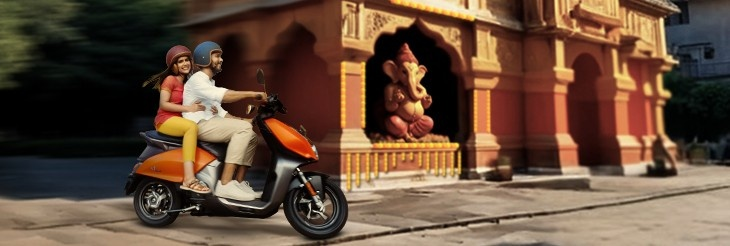
| Summary: Ganpati season transforms city roads across Maharashtra and Karnataka. Here's a rider-tested plan to handle procession traffic, plan detours and keep your commute moving in Mumbai, Pune and Bengaluru. |
Did you know Bengaluru commuters lose roughly 168 hours a year to traffic, making it the world's second-most congested city? Pune ranks fifth. Add ten days of Ganpati celebrations on top of that, with lakhs of devotees on foot, procession routes cutting through arterial roads and visarjan ceremonies drawing crowds to waterfronts, and your regular commute needs more time, more route awareness and a fully charged scooter.
Ganeshotsav fills Mumbai, Pune, and Bengaluru with colour, music and community energy. For two-wheeler riders, the festival also brings road closures, diversions and shifting traffic patterns around pandal clusters and immersion points. Most of this disruption follows a published schedule, and a bit of preparation keeps your commute smooth even on visarjan day. Here are the city-specific timing strategies, route tips and charging prep steps that make the difference.
What to Expect on the Roads
Ganpati festival traffic peaks on four key days across Mumbai, Pune and Bengaluru, each tied to a major Ganesh Chaturthi traffic advisory and route diversion cycle. The opening day (Ganesh Chaturthi), the one-and-a-half-day visarjan, the fifth-day visarjan, and Anant Chaturdashi (the final visarjan) bring the heaviest congestion, road closures and police-managed diversions across all three cities.
During the 2025 visarjan alone, Mumbai's traffic police closed 84 major roads to vehicles, converted 54 others to one-way, and placed 88 roads under strict traffic control. Pune shut down 17 arterial roads including Laxmi Road and Bajirao Road. Bengaluru issued traffic advisories around immersion lakes, with diversions active from afternoon into the early hours. Procession routes, pandal clusters and immersion points create the worst bottlenecks, especially during morning and evening aarti hours when pedestrian movement peaks.If you've experienced pandal-hopping traffic during the ten-day festival, visarjan day is that intensity concentrated into a single evening. Noise, crowds, and sudden route changes make it uniquely demanding for riders.
City-by-City Survival Tips
Each city has its own procession geography, immersion points and congestion patterns, so a single set of festival commute tips won't cover Mumbai, Pune and Bengaluru equally. Road closures, peak-delay hours, and open alternate corridors vary widely. Knowing which roads to avoid and when to leave in your city saves more time than any shortcut.
Mumbai
Mumbai's major immersion points sit at Girgaum Chowpatty, Juhu Beach, Dadar and Versova. Procession routes through Parel, Byculla, Tardeo and Chembur see full closures from morning through the night on visarjan days. The sheer volume of processions heading to these waterfronts is what drives full-day road shutdowns on Anant Chaturdashi.
Your best options on peak days include the Chhatrapati Sambhaji Maharaj Coastal Road for north-south travel and the Eastern Freeway to avoid South Mumbai congestion. Plan trips before 10 AM or after midnight on visarjan day. If you're heading out for pandal hopping, park well away from procession routes and walk the last stretch.
Pune
Pune's Ganpati processions centre around the old city. Shivaji Road, Laxmi Road, Tilak Road, Bajirao Road and Kelkar Road remain closed from morning on visarjan day through the following afternoon. Areas around Sinhgad Road, Dhayari Phata and Mundhwa see diversions from early evening. Heavy vehicles face a 48-hour ban on entering city limits during the final immersion.
Think in ring routes. Stay on the outer ring road and Pune-Bengaluru Highway stretches for cross-city travel. Avoid the Peth areas entirely during the final three days. If your commute touches the old city, shift your timing to early morning before 8 AM.
Bengaluru
Bengaluru's Ganpati celebrations are smaller in scale than Mumbai's or Pune's, but immersion activity around Ulsoor (Halasuru) Lake, Sankey Tank and Yediyur Lake creates localised congestion. In 2025, traffic advisories around Halasuru Lake ran from 2 PM to 4 AM on immersion days. The BBMP identified 40 lakes across the city as immersion points, each with its own set of diversions.
Basavanagudi, Vijayanagar and the Kensington Road stretch near Ulsoor see the most disruption. Plan around peak hours (4 PM to midnight on immersion days). Check for diversions on Annaswamy Modaliyar Road and Tank Road if you ride through the Ulsoor corridor, and sort any pending scooter service at your nearest dealer before the festival week starts.
Smart Commuting During the Festival
Festival traffic follows a set pattern if you know where to look. Closures and diversions follow publicly announced schedules, and the same corridors get affected year after year. The real advantage goes to riders who plan ahead rather than react on the road, because congestion is temporary, but a wrong turn near a visarjan route can cost you hours.
Here are five strategies that work across all three cities during Ganeshotsav.
- Leave 30–45 minutes earlier than usual: Procession activity picks up by mid-morning and peaks in the evening. Early starts avoid the worst of both windows.
- Pre-charge your scooter the night before: A full battery gives you the flexibility to take longer detours without range anxiety. If you ride a VIDA, the charging network across 5,900+ stations in 450+ cities means you can top up even on an unplanned route..
- Save two or three alternate routes: Use your phone's navigation to map alternatives before leaving. Avoid routes that pass immersion points or major pandal clusters..
- Ride predictably in slow traffic: Sudden lane changes and aggressive filtering create risk in dense pedestrian-heavy stretches. Keep a steady pace and stay visible.
- Park legally and away from procession routes: Vehicles parked near immersion routes risk towing. Use designated parking zones announced by local police, and if your scooter needs attention mid-festival, roadside assistance can reach you without requiring you to move the vehicle.
| Tip: One of the most useful things you can do before any immersion day is to check your city's traffic advisory the night before. City traffic police publish detailed road closure lists, one-way conversions and diversion maps well ahead of each visarjan, and these routes shift from year to year depending on procession arrangements. Spending five minutes with the advisory after dinner tells you exactly which stretches of your commute will be affected and which alternates stay open, so you can plan your ride before you leave home rather than figuring it out at a barricade. It sounds basic, but riders who build this into their routine spend far less time caught in festival congestion.. |