Electric Scooter Charging Cost in Indian Cities: Bangalore vs Pune vs Delhi Explained
Published by VIDA
Read Time: 2 min 30 sec
Date: 24th June 26
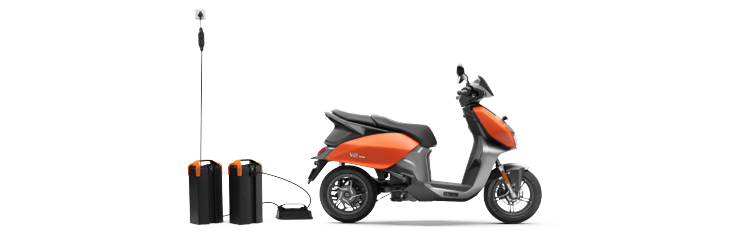
India’s electric mobility journey is growing rapidly. From daily commutes to short city rides, users are shifting toward smarter, smoother, and more cost-effective travel. With 1.97 million EV registrations in FY 2024–25 and 21.2% YoY growth in EV Scooter sales, adoption is rising fast.
Charging costs vary by city. Delhi is lower, Bangalore is higher, and Pune is mid-range, typically ₹7 to ₹24 per charge depending on usage. Understanding these differences helps riders plan better. Let’s break it down.
What is the Electric Scooter Charging Cost in India?
Charging an electric scooter is simple and highly cost-efficient. According to NITI Aayog and ICCT, most electric two-wheelers in India use batteries ranging from 1.44 kWh to 3.7 kWh, depending on the model category.
Charging cost depends mainly on battery capacity, local electricity tariff, and minor efficiency losses during charging.
At average residential tariffs of ₹5 to ₹8 per unit, costs typically range as follows:
1.44 kWh: ₹7.90 – ₹12.64
2.25 kWh: ₹12.40 – ₹19.84
3.24 kWh: ₹17.80 – ₹28.48
This means daily commuting often costs just a few rupees in electricity.
Research by the Alliance for an Energy Efficient Economy (AEEE) shows that monthly charging expenses typically range from ₹200–₹300, while running costs average ₹0.20–₹0.40/km. Overall, electric scooters remain a stable, predictable, and economical alternative to petrol-powered commuting.
Electric Scooter Charging Cost vs Running Cost per KM
The biggest advantage of electric scooters shows up in everyday running costs.
Cost per km Breakdown
If a scooter delivers a 142 km range on a full charge costing around ₹14, the running cost is nearly ₹0.10/km. In real-world usage, VIDA EV Scooters offer about ₹0.17/km.
Comparison With Petrol Scooters
Electric scooters deliver significantly lower running costs, making them a more economical choice for daily commuting.
Why Are EVs Cheaper in the Long Term?
Electric scooters are built with fewer moving parts, which means:
Lower maintenance
Fewer workshop visits
No engine oil changes
Lower servicing costs
Over time, these savings become noticeable, especially for riders commuting daily through busy city roads.
How Far Does an Electric Scooter Go on One Charge? (miles per charge explained)
Range depends on battery size, riding mode, traffic, terrain, and habits.
For example, the VIDA V2 Pro with a 3.94 kWh battery offers 165 km (~102 miles) per charge.
That means:
Daily office commutes
Quick city errands
Weekend rides
EV scooters can often be managed without worrying about frequent charging.
Real-world range may vary depending on:
Traffic conditions
Rider weight
Accelerating habits
Road gradients
Riding mode
Regenerative braking improves efficiency in city traffic. This reflects typical electric scooter performance per charge.
Electric Scooter Charging Cost in Bangalore
Electricity Tariff Impact
BESCOM residential tariffs start at ₹5.90/unit for the first 100 units and rise across higher slabs. With surcharges, the effective rate is about ₹6.82/unit.
The Gruha Jyothi scheme offers up to 200 free units to eligible households, significantly reducing costs.
Monthly Charging Expense Estimate
For a 3.4 kWh battery charged 20 times a month, the estimated cost is ₹400–₹464/month.
Even with higher tariffs, EV charging remains far cheaper than petrol commuting.
Electric Scooter Charging Cost in Pune
Usage Patterns
Pune’s growing EV adoption and daily commuting patterns make electric scooters a practical choice for urban riders. Most riders covering 25–40 km daily may need to charge only every few days.
Cost Variation vs Bangalore
Under the revised MSEDCL tariff effective July 2025:
Pune’s lowest slab rate starts at ₹4.08/unit.
This means:
A 3.4 kWh battery costs around ₹14 per full charge
Estimated monthly charging expense stays around ₹280
Compared with Bangalore, Pune riders can save nearly ₹120 per month on charging.
MERC’s proposed tariff reductions for residential users could further lower charging costs in the coming years.
Electric Scooter Charging Cost in Delhi
Tariff Structure
Delhi offers some of the lowest domestic electricity rates among major Indian cities.
DERC tariffs begin at:
₹3/unit for the first 200 units
The Delhi government also provides:
100% subsidy for households consuming up to 200 units
50% subsidy for households within the 201–400 unit bracket
Cost Advantage or Differences
Delhi’s lowest tariff:
A 3.4 kWh battery costs approximately ₹10.50 per charge
A 2.2 kWh battery costs around ₹6.60
Estimated monthly charging expense:
Around ₹210
For eligible households staying below the subsidy threshold, charging costs can become almost negligible.
| City | Lowest Slab Rate | Cost Per Full Charge (3.4 kWh) | Monthly Estimate |
| Delhi | ₹3/unit | ₹10.50 | ₹210 |
| Pune | ₹4.08/unit | ₹14 | ₹280 |
| Bangalore | ₹5.90/unit | ₹20 | ₹400 |
For everyday riders, these differences can add up to meaningful long-term savings.
How To Reduce Electric Scooter Charging Costs?
Want to maximise every charge?
Here are a few simple ways:
Charge at home overnight
Use Eco mode during city rides
Maintain battery health
Stay within the lower tariff slabs
Use regenerative braking efficiently
If your scooter comes with removable batteries, charge them anywhere using a standard 5A socket. Small habits can make a big difference over time.
| Tips and Hacks |
| To keep your electric scooter's charging costs low, charge during off-peak hours (10 PM–6 AM). Use Eco mode to extend range and lower charging frequency. Removable batteries allow convenient indoor charging via a standard 5A socket. Regenerative braking also improves efficiency by recovering energy during braking, making city riding more economical and efficient overall. |
How Affordable is Electric Scooter Charging?
The numbers speak clearly. India’s electric two-wheeler market grew 10% (Jan–Nov 2025), reaching 1.18 million registrations.
Running costs are about ₹0.17/km, with monthly charges between ₹200 and ₹400, making commuting highly affordable.
With a 5-year/50,000 km vehicle warranty and 3-year/30,000 km battery cover, VIDA ensures worry-free ownership.
Key Takeaways
Delhi offers the lowest charging cost at approximately ₹10.50 per full charge.
Pune averages around ₹14 per charge.
Bangalore charging costs stay close to ₹20 per charge.
VIDA scooters have an operating cost of approximately ₹0.17/km.
Home charging remains the most affordable option for urban riders.
Subsidy schemes can significantly reduce overall electricity expenses.
Your charging cost is a function of where you live and how you charge. Pick the right tariff slab strategy, charge at home when possible, and the running costs stay remarkably low.
Explore VIDA scooters to see which model fits your city and commute.
FAQs
1. What is the average electric scooter charging cost in India?
Most electric scooters cost between ₹10 and ₹24 for a complete charge depending on battery size and local electricity tariffs.
2. How much does it cost to fully charge an electric scooter?
A 3.4 kWh battery costs approximately:
₹10.50 in Delhi
₹14 in Pune
₹20 in Bangalore
3. How many kms does an electric scooter run per charge?
Electric scooter miles per charge vary by model. The VIDA VX2 Go 2.2 kWh provides 92 km (~57 miles). Actual range varies with riding conditions, load, and mode.
4. Which city has the lowest electric scooter charging cost?
Among Bangalore, Pune, and Delhi, Delhi currently offers the lowest electric scooter charging cost due to lower electricity tariffs and subsidy support.