PM E-Drive Scheme: Complete Guide to Eligibility, Benefits & Application Process (2026)
Published by VIDA
Read Time: 1 min 30 sec
Date: 23rd July 26
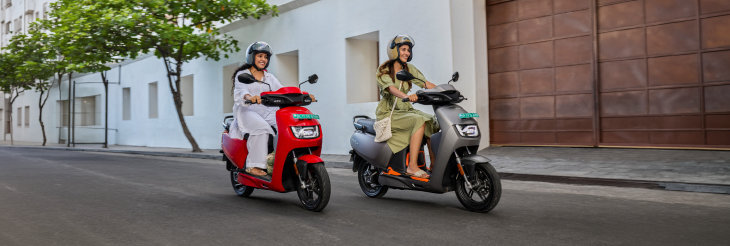
If you plan to buy an electric scooter in 2026, a government subsidy is available under the PM E-Drive scheme, which has already supported over 1.13 million EVs in its first year, and India's overall EV penetration reached 8.5% in FY26.
Let us break down the eligibility, subsidy amounts, and the application process step by step.
What is the PM E-Drive scheme?
Approved by the Union Cabinet, PM E-DRIVE is a ₹ 10,900-crore scheme launched on 1 October 2024 to boost EV adoption and charging infrastructure, replacing the earlier FAME programmes.
The budget allocation breakdown is as follows:
₹3,679 crore for demand incentives on e-2Ws, e-3Ws, e-ambulances, and e-trucks
₹4,391 crore for 14,028 e-buses
₹2,000 crore for EV charging infrastructure
Is the PM E-Drive scheme still active in 2026?
The scheme remains active in 2026, with e-2W subsidies valid until 31 July 2026 and the overall programme running till 31 March 2028, though benefits may end earlier if funds are exhausted.
Key benefits and subsidies under the PM E-Drive scheme
For FY 2025-26, the demand incentive for electric two-wheelers is ₹2,500 per kWh, capped at 15% of the ex-factory price. Only e-2Ws priced below ₹1.5 lakh (ex-factory) qualify.
Subsidy calculation examples for Indian EV buyers
Here is how the math works for a few scenarios:
| Battery capacity | Subsidy calculation (₹2,500 × kWh) | Approximate subsidy amount |
| 2.2 kWh | 2.2 × ₹2,500 | ₹5,500 |
| 3.4 kWh | 3.4 × ₹2,500 | ₹8,500 |
| 3.94 kWh | 3.94 × ₹2,500 | ₹9,850 |
The actual amount is subject to the 15% ex-factory price cap and any per-vehicle cap applicable at the time of purchase.
For example, a VIDA VX2 Go with a 2.2 kWh battery (priced at ₹77,590 ex-showroom) and a VIDA V2 Pro with a 3.94 kWh battery (priced at ₹1,20,300 ex-showroom) both fall within the ₹1.5 lakh eligibility threshold.
PM E-Drive scheme eligibility criteria: who can apply?
The eligibility rules are straightforward but specific:
Only EVs with advanced batteries (Li-ion) qualify
One EV per category per Aadhaar-verified individual
Privately or corporately owned e-2Ws are eligible
Government department purchases do not qualify
The OEM must provide a comprehensive warranty, including battery coverage
Eligible vehicle categories under PM E-Drive
The scheme covers approximately 2.5 million e-2Ws, e-3Ws, e-buses, e-ambulances, and e-trucks. Electric cars and hybrid vehicles are excluded.
| Pro Tip |
| Link your Aadhaar to your mobile number before visiting the dealership, as it is required to generate the e-Voucher. The scheme is fund-limited, so subsidies may end early once the ₹10,900 crore outlay is fully utilized. Only eligible EVs with Li-ion batteries priced below ₹1.5 lakh (for electric two-wheelers) qualify, and the subsidy is applied instantly at the point of sale. |
How to apply for the PM E-Drive scheme: step-by-step registration guide
Here is the best part: you do not need to file a separate application. The subsidy is provided as an upfront reduction in the purchase price, deducted at the dealership. The OEM later claims reimbursement from the Ministry of Heavy Industries.
Required documents for PM E-Drive registration
You just need one key document: your Aadhaar card linked to your mobile number for e-KYC FACE authentication when generating the e-Voucher.
Online registration process on the PM E-Drive portal
Visit an authorised EV dealer and select your scooter
The dealer initiates the process on the PM E-DRIVE portal
Complete Aadhaar-authenticated e-KYC at the dealership
The portal generates your e-Voucher, and a download link is sent to your registered mobile
You pay the subsidy-reduced price; the OEM claims the balance from MHI
PM E-Drive vs. FAME II scheme: what's the difference?
Here is a complete breakdown of PM E-Drive vs. FAME II scheme:
| Parameter | FAME II | PM E-Drive |
| Outlay | ₹11,500 crore | ₹10,900 crore |
| EVs supported (total) | 1.32 million over 9 years | 1.13 million in year one alone |
| e-2W subsidy (FY25–26) | N/A (ended March 2024) | ₹2,500/kWh |
| Subsidy mechanism | Post-purchase reimbursement | Upfront e-Voucher deduction |
| Charging infrastructure | 8,932 chargers installed | 72,000 chargers targeted |
The takeaway: PM E-Drive offers 3.4 times higher annual EV volumes with a similar budget, trading higher per-unit subsidies for broader reach.
PM E-Drive scheme targets and goals
The scheme aims for a 10% EV two-wheeler market share by March 2026 and up to 80% electric two-wheelers by 2030. In FY25, EV-2 wheeler achieved 95% of their target, showing strong early progress.
How the PM E-Drive scheme benefits VIDA electric scooter buyers
All VIDA scooters qualify for PM E-Drive, as they use removable Li-ion batteries and are priced between ₹77,590 and ₹1,20,300, within the ₹1.5 lakh limit. VIDA also offers a 5-year vehicle warranty, 3-year battery warranty, and multiple charging options, making ownership more cost-efficient.
Charging infrastructure development under PM E-Drive
The scheme allocates ₹2,000 crore to build 48,400 fast chargers and develop the Unified Bharat eCharge platform for seamless charging access across networks.
State-wise implementation: how PM E-Drive works across India
Central subsidies can be combined with state incentives like road tax waivers, toll relief, and parking benefits. States such as Delhi, Goa, and Karnataka show higher EV adoption due to these added benefits.
Common challenges and how to overcome them
A few key points to keep in mind before applying:
Fund-limit risk: Subsidies end once the ₹ 10,900-crore budget is exhausted.
Aadhaar linking: Mobile-linked Aadhaar is mandatory for e-Voucher generation.
One EV rule: Only one subsidy per category per person is allowed.
Conclusion
PM E-Drive makes EV adoption more affordable with upfront discounts, expanding charging infrastructure, and added state benefits, strengthening the case for switching in 2026. If you are ready to explore your options, check out the full VIDA scooter range to find a model that fits your commute and budget.
FAQs
1. What is the full form of the PM E-Drive scheme?
PM E-DRIVE Scheme is a ₹10,900 crore Government of India initiative, approved by the Union Cabinet, aimed at promoting electric vehicle adoption, expanding charging infrastructure, and supporting domestic EV manufacturing across the country.
2. How much subsidy can I get under the PM E-Drive scheme?
₹2,500 per kWh of battery capacity, capped at 15% of ex-factory price. Actual benefits vary by model and battery size.
3. Is the PM E-Drive scheme still active in 2026?
Yes. e-2W subsidies run until 31 July 2026, while the full scheme continues till 31 March 2028, subject to fund availability.
4. Who is eligible to apply for the PM E-Drive scheme?
PM E-DRIVE Scheme is open to individual buyers with Aadhaar-linked mobile numbers. Each person can avail one EV per category. The vehicle must have a Li-ion battery and comply with CMVR norms; e-2Ws must be priced under ₹1.5 lakh (ex-factory).
5. How do I apply for the PM E-Drive subsidy online?
No separate application needed. Subsidy is applied instantly at the dealership via an Aadhaar-based e-Voucher at the time of purchase.
6. Which vehicles are covered under the PM E-Drive scheme?
e-2Ws, e-3Ws, e-buses, e-ambulances, and e-trucks. Electric cars and hybrids are excluded. All VIDA EVooters, from the VX2 Go to the V2 Pro, meet the eligibility criteria.
7. How is PM E-Drive different from the FAME II scheme?
FAME II offered higher per-vehicle subsidies through dealers and OEMs. PM E-Drive offers lower but instant discounts via Aadhaar-linked e-Vouchers at purchase, covers a broader vehicle mix, and prioritises higher adoption volumes over deep per-unit support.
8. Can I get both the state EV subsidy and the PM E-Drive subsidy?
Yes. State EV incentives, such as tax waivers or registration benefits, can be added on top of the central PM E-Drive subsidy, depending on state policy.