Most Anticipated Electric Scooters Launching in India in 2026 — Worth the Wait?
Published by VIDA
Read Time: 1 min 30 sec
Date: 30th June 26
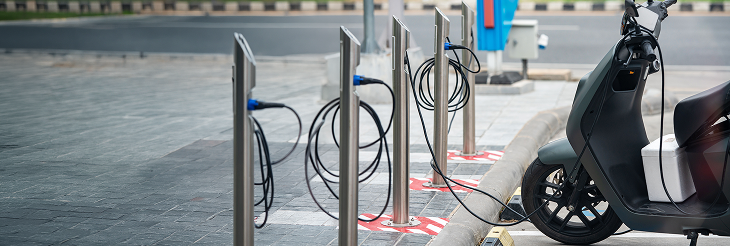
According to recent data, electric two-wheelers crossed 1.4 million registrations this year. That’s a significant rise over previous years, showing the strong growth in interest in electric scooters.
For buyers evaluating a new electric scooter right now, range figures, smart, connected dashboards, and removable-battery designs are all important considerations. The segment has matured fast, and knowing the trends behind these launches will help you make a confident purchase.
Why 2026 Is a Defining Year for Electric Scooters in India
India's electric two-wheeler segment grew 21.8% year-on-year in FY2026, even as GST reforms from September 2025 narrowed the price gap between electric and fuel-powered scooters. Monthly dispatches crossed six figures in 10 of the 12 months. Electric two-wheelers registered sales of 1,70,570 units in May 2026, a 63% increase year-over-year from May 2025. This is the second-highest monthly total ever for the segment after March 2026.
What sets 2026 apart from earlier years is the nature of the growth. Established manufacturers with deep dealer networks now lead the segment, bringing after-sales confidence that translates directly into repeat purchases and word-of-mouth recommendations.
For buyers in cities such as Bengaluru, Pune, Hyderabad, and Delhi, this growth brings a wider set of choices at multiple price points, along with stronger post-purchase support and models designed for Indian road conditions.
Key Trends Shaping New Electric Scooter Launches
The new electric scooter models arriving through 2026 offer longer certified range, faster charging, removable batteries, connected dashboards, and a lower total cost of ownership.
Higher certified range as standard: Models now commonly offer 100–165 km of IDC-certified range. A few years back, 80 km was considered adequate. Buyers commuting 15–40 km daily can comfortably cover a full working week on two charges.
Removable battery designs are gaining ground: The ability to detach the battery, carry it indoors, and charge using a standard 5A home socket removes the need for dedicated parking-level infrastructure. This is a practical shift for the millions of apartment dwellers in Indian metros.
Expanding public charging networks: India had 29,000 public EV charging stations installed as of February 2026. The PM E-DRIVE scheme has allocated ₹2,000 crore for approximately 72,000 additional charging points across 50 national highway corridors.
Connected smart features at lower price points: Turn-by-turn navigation, OTA updates, geo-fencing, and crash alerts are appearing across the price spectrum, not just on flagship models.
Improvements in Battery Technology and Real-World Range
The latest electric scooter models in India now regularly offer 100–165 km of certified range on a single charge, compared to 80–110 km two years ago. This improvement has occurred for several reasons, including higher-density lithium-ion cells, refined battery management systems (BMS), and regenerative braking that recovers energy during deceleration. For city commuters, the practical outcome is fewer charging stops and more confidence on longer routes.
Removable battery architectures have also contributed to range gains. Dual-battery configurations offer higher total capacity (3.4 to 3.94 kWh) without dramatically increasing kerb weight, and the ability to charge each pack separately at home, at work, or at a fast-charging station gives riders the flexibility that a fixed-battery setup cannot match.
Smart Features and Connectivity Buyers Should Expect
Connected dashboards, turn-by-turn navigation, over-the-air (OTA) updates, and safety alerts have moved from flagship-only to widely available across 2026 electric scooter models. A colour TFT display, Bluetooth app pairing, and navigation support are now expected at mid-range price points.
Smart connectivity changes how you interact with your scooter daily. The features that matter for Indian city riding include:
Navigation and ride data: Turn-by-turn directions on the dashboard eliminate the need for a phone mount. Ride statistics such as distance, efficiency, and battery health are tracked via companion apps. Models such as the VIDA V2 Pro pair a 7-inch TFT touchscreen with full app integration for real-time ride insights.
Safety and security alerts: Crash and fall detection with emergency notifications, geo-fencing with boundary alerts, remote immobilisation if the scooter is moved without authorisation, and over-speed warnings are now standard on several models. These features address genuine urban riding concerns in cities with dense, unpredictable traffic.
Over-the-air updates: OTA capability allows manufacturers to push software improvements, bug fixes, and even new features to your scooter without a visit to a service centre. This keeps the scooter's software up to date throughout its ownership.
For daily commuters, navigation removes friction, safety alerts provide peace of mind, and OTA updates protect your investment over time.
Did You Know? Charging your electric scooter overnight at home using a standard 5A socket is enough for most daily commutes under 40 km. You do not need to wait for a full 100% charge every time. Regularly topping up to 80% is gentler on the battery's long-term health and still provides a comfortable daily range. Treat charging like your phone: plug in at night, ride out in the morning. |
How New Launches Could Shape Your Buying Decision
New electric scooters are entering the market, each packed with a wide range of features. With so many options out there, it can be hard to decide which one is the right fit for you.
Here’s a framework for evaluating what matters most in a new electric scooter purchase in 2026:
| Buying Criterion | What to Look For | Why It Matters |
| Daily range vs commute distance | Certified range at least 2.5x your daily km | Covers real-world conditions, winter-range dip, and pillion weight without adding stress. |
| Charging access | Removable battery + 5A home socket support | Eliminates reliance on public infrastructure, particularly for apartment dwellers. |
| Ride modes | Eco, Ride, and Sport as a minimum | Eco for range maximisation on long days, Sport for quick overtaking. |
| Connected features | Navigation, crash alerts, OTA updates | Daily utility for city riding and long-term software improvements. |
| After-sales network | Manufacturer-backed service centres in your city | Fast repairs and genuine parts matter more than launch-day specs over a 5-year ownership period. |
| Warranty coverage | 5-year vehicle + 3-year battery as baseline | Protects your investment. Look for optional extended warranty programmes that cover battery degradation. |
After-sales confidence has become the decisive factor in 2026. Legacy manufacturers with established dealer and service infrastructure across Indian cities are earning a larger share of buyer preference because of this trust. VIDA EVooters, for instance, benefits from Hero MotoCorp's nationwide service network, a practical advantage from day one of ownership.
Should You Buy a New Electric Scooter Now or Wait?
For most urban commuters riding 15–40 km daily, current electric scooter models already meet everyday needs in range, charging, and connectivity. That said, waiting can make sense in specific situations.
| Consider Buying Now If… | Consider Waiting If… |
| Your daily commute is 15–40 km, and current models cover it comfortably. | You need 200+ km of certified range for regular intercity trips (a few high-range models are expected later in 2026). |
| You have access to a 5A socket at home or at work for charging a removable battery. | Your city has limited service centre presence for your preferred brand, and expansion is confirmed. |
| You want to lock in the current PM E-DRIVE subsidy before July 2026. | You are waiting for a specific manufacturer's announced launch within the next 2–3 months. |
| Your current fuel costs exceed significantly more than your monthly budget. | Your existing scooter is under 2 years old and running well. |
Conclusion
The current-generation electric scooters already deliver on the fundamentals, such as a range of over 100 km, removable batteries, connected dashboards, IP67/IP68-rated components, and comprehensive warranty programmes.
The electric scooter market in India has reached a point where the technology, the infrastructure, and the economics align for most urban commuters. Your decision comes down to matching your commute length, charging access, and priorities to the right model.
FAQs
1. Which electric scooters are expected to launch in India in 2026?
Several manufacturers have confirmed new electric scooter models for 2026 across multiple price segments. These include refreshed variants with higher battery capacity, extended range, faster charging, and improved connected features. Specific launch timelines vary, but the trend across the segment is toward models that prioritise daily urban commuting with removable batteries and smart dashboards.
2. What new features can buyers expect from 2026 electric scooters?
The most significant feature improvements in 2026 models include certified ranges of 100–165 km, removable batteries that can be charged at any 5A home socket, colour TFT dashboards with turn-by-turn navigation, OTA software updates, and advanced safety alerts such as crash detection and geo-fencing. Regenerative braking and multiple ride modes (Eco, Ride, Sport) are also becoming standard across the segment.
3. Should you wait for a new electric scooter or buy one now?
For buyers with a daily commute of 15–40 km and access to a home charging socket, current-generation electric scooters already deliver on range, safety, and connectivity. The PM E-DRIVE subsidy has a July 2026 terminal date, and every month on fuel adds to running costs. Waiting makes more sense only if you specifically need 200+ km range or a particular model launch is imminent.
4. Are upcoming electric scooters expected to offer significantly better range?
Battery technology improvements are incremental, not dramatic. Expect certified range figures to continue climbing by 10–20% over the next 12–18 months, driven by higher-density lithium-ion cells and better battery management. Real-world range in Indian city conditions will remain lower than IDC claims due to traffic, rider weight, and temperature, so prioritise real-world figures over certified numbers.
5. How has India's EV charging infrastructure improved for electric scooter buyers?
Public charging stations have grown from roughly 5,000 in 2022 to over 29,000 in 2026. The PM E-DRIVE scheme is funding 72,000 additional charging points across national highway corridors and metro cities. For electric scooter owners specifically, removable battery designs reduce dependence on public chargers, since a standard 5A home socket is all you need for overnight charging.