How to Ride an Electric Scooter for Beginners: A Step-by-Step Guide
Published by VIDA
Read Time: 1 min 30 sec
Date: 25th September 26
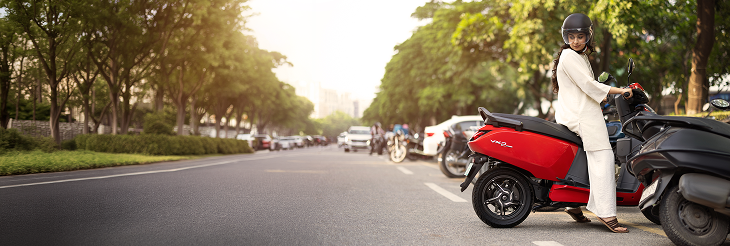
| Summary: A step-by-step walkthrough for first-time electric scooter riders, covering pre-ride checks, controls, braking, city etiquette, and features that flatten the learning curve. |
Two-wheeler riders accounted for 46.2% of all road fatalities in India during 2024. A significant share of those incidents traced back to preventable factors, from improper gear and unfamiliarity with the vehicle to rushed first rides without adequate practice.
An electric scooter adds another layer of newness. There's no clutch, no gear lever, and almost no engine noise. Throttle response is instant, braking feels different thanks to regenerative systems, and the silence can catch pedestrians off guard. None of these differences is hard to manage, but they do require a short orientation before you hit traffic.
Here's what every new rider should know, from the pre-ride checklist through confident city commuting, covered one step at a time.
Before You Start: Gear and Checks
A safe first ride begins before you sit on the scooter. Proper gear and a quick vehicle check take under five minutes and prevent the most common beginner mistakes. Skipping either one is the single fastest way to turn a manageable ride into an avoidable incident.
Start with what you wear. A BIS-certified helmet is non-negotiable. Pair it with closed-toe shoes, full-length trousers, and a jacket or long-sleeved top that covers your arms. Gloves improve grip, especially in humid weather.
Before switching on, run through this pre-ride check.
- Battery level: Confirm enough charge for your planned distance, plus a buffer.
- Tyre pressure: Low pressure affects handling, especially during turns.
- Brake levers: Squeeze both front and rear levers to check for a firm, responsive feel.
- Mirrors:Adjust for a clear rearview on both sides.
- Lights and indicators:Toggle each one to confirm they work.
Your scooter's user manual lists model-specific checks, including recommended tyre pressure values and indicator locations.
Understanding the Controls
Electric scooters replace the clutch-gear-throttle sequence of a geared vehicle with a simpler layout. A twist throttle sits on the right, brake levers on both sides, and ride mode selection on the display or handlebar buttons. The learning curve is shorter, but the controls deserve a few minutes of attention before you ride.
The right-hand twist throttle controls acceleration. Unlike a geared vehicle, there's no clutch to feather. Twist gently, and the motor responds immediately. Ride modes (such as Eco and Ride) limit top speed and throttle sensitivity, so starting in the gentlest mode gives you a softer response while you build muscle memory.
Braking typically uses a combined braking system (CBS), where applying one brake lever distributes force across both wheels. Many electric scooters also feature regenerative braking, which slows the scooter and feeds energy back to the battery when you release the throttle. The drag feels unfamiliar at first but becomes natural within a few rides.
The digital display shows speed, battery level, ride mode, and connectivity status. Familiarise yourself with the display and smart features while the scooter is parked, so you're not reading the screen while moving.
Your First Ride, Step by Step
The safest way to learn how to ride an electric scooter is to break the first ride into small, repeatable steps in an empty space, such as a parking lot, a quiet lane, or a gated community road with no traffic.
Follow this sequence:
- Mount and position: Sit centred on the seat with both feet flat on the ground. Keep your back upright and your hands relaxed on the grips.
- Switch on: Turn the key or press the start button. Wait for the display to initialise fully.
- Retract the side stand: Most electric scooters have a side-stand cut-off, which means the motor will not engage until the stand is fully retracted.
- Select Eco mode: The lowest-power mode limits speed and softens throttle response, giving you more control.
- Accelerate gently: Twist the throttle slowly and steadily. Avoid sudden, full-twist inputs. Let the scooter build speed gradually.
- Balance at low speed: Keep your eyes on the road ahead (not the front wheel). Slight handlebar corrections are normal below 15 km/h.
- Practise stopping: 1. Apply both brakes gently and progressively. Come to a complete stop, place both feet down, and repeat.
Repeat this loop (start, ride 50 metres, stop) several times. Once smooth acceleration and controlled braking feel natural, try wider turns and gentle figure-eight patterns.
| Tip: Starting in Eco mode isn't just about safety. It also builds the right throttle habits. Riders who learn smooth, gradual inputs in Eco find the transition to faster modes much more controlled. |
Braking and Cornering Confidently
Progressive braking and early speed reduction before a turn are two electric scooter riding tips that prevent most low-speed incidents. Practising both in a controlled space builds muscle memory that transfers directly to city roads.
Braking on an electric scooter works best when you apply both levers together, progressively. Squeeze, don't grab. Start light, then increase pressure until you reach the desired deceleration. Sudden, hard braking at speed can lock a wheel, especially on loose gravel or wet surfaces.
For corners, slow down before you enter the turn, not during it. Look through the corner toward where you want to exit. Keep a steady throttle (or a very light one) through the turn, and accelerate gently as you straighten. Wet-road caution applies doubly here. Painted lane markings, manhole covers, and metal plates become slippery in rain. Avoid leaning too aggressively, and increase your following distance.
City Riding and Road Etiquette
Confident city riding on an electric scooter depends less on speed and more on awareness, positioning, and predictability. Riding in a straight, visible lane position and signalling every turn gives surrounding traffic enough information to adjust around you.
Stay in the left lane (the designated two-wheeler lane in most Indian cities) unless overtaking. Use indicators well before turning, not during the turn. Maintain at least a two-second distance behind the vehicle ahead, which gives you enough reaction time at typical urban speeds of 30–50 km/h.
The near-silence of an electric scooter is a genuine factor in urban commuting. Pedestrians, cyclists, and auto-rickshaw drivers may not hear you approaching from behind. A light tap on the horn at intersections and blind corners keeps everyone aware.
Park in designated two-wheeler parking zones. Engage the handle lock, switch off the vehicle, and deploy the side stand on a flat, stable surface.
Building Confidence With Your VIDA Scooter
VIDA, powered by Hero MotoCorp, designs its scooters with first-time riders in mind. Every model ships with Eco mode as a standard ride option, which caps throttle sensitivity and top speed to match a beginner's comfort level. The VIDA VX2 Go, for instance, offers Eco and Ride modes with a 106 kg kerb weight that keeps the scooter light and manoeuvrable in tight urban spaces.
VIDA's digital display shows real-time battery status, speed, and ride mode at a glance, so new riders spend less time guessing and more time watching the road. Bluetooth connectivity through the VIDA app adds turn-by-turn navigation, ride statistics, and vehicle diagnostics, all accessible without pulling over.
The strongest beginner electric scooter guide is a real ride, not a blog post. You can book a guided test ride at your nearest VIDA dealer, where a trained staff member walks you through the controls, ride modes, and braking feel on an actual scooter. Before you ride, familiarise yourself with VIDA's charging options as well, so range anxiety never interrupts your learning sessions.
Conclusion
Riding an electric scooter for the first time is less about courage and more about preparation. A proper helmet, a five-minute vehicle check, and a quiet lane for practice remove most of the uncertainty. The rest comes from repetition. Start, ride, brake, turn, repeat.
Every confident city rider started with those same awkward first metres. The difference between a nervous first ride and a smooth one is rarely talent. It's almost always the willingness to practise the basics before heading into traffic.
FAQs