Subsidy for Electric Scooter in India: Latest 2026 Updates
Published by VIDA
Read Time: 1 min 30 sec
Date: 24th June 26
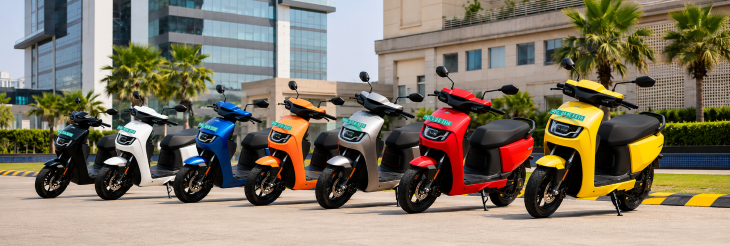
Electric two-wheelers now make up 6.54% of all two-wheeler registrations in India as of FY26. That share is growing in cities such as Bengaluru, Delhi, Pune, and Hyderabad, where running costs and sustainability both factor into buying decisions.
A key accelerant behind that growth is the government subsidy for electric scooter purchases under PM E-Drive. The scheme has been extended, but the subsidy amount is now lower, and the budget is finite. Before you finalise your purchase, here’s what you need to know.
Is There Still a Subsidy on Electric Scooters in India in 2026?
Yes. The central government's PM E-Drive scheme is active for electric two-wheelers until July 31, 2026. The Ministry of Heavy Industries extended the original March 31, 2026 cutoff by four months. The broader scheme, backed by a total outlay of ₹10,900 crore, continues until March 2028 for three-wheelers and heavier vehicle segments.
The subsidy rate was halved in April 2025. Here’s how the incentive has changed since launch.
| Period | Subsidy per kWh | Cap per Vehicle |
| October 2024 to March 2025 | ₹5,000 | ₹10,000 |
| April 2025 to July 2026 | ₹2,500 | ₹5,000 |
Over 28 lakh electric vehicles have already been sold under the scheme as of February 2026, with two-wheelers accounting for the bulk of that number.
How Much Can You Save with the Electric Scooter Subsidy?
The current PM E-Drive subsidy on electric scooter purchases saves up to ₹5,000 on the ex-showroom price. The incentive is calculated at ₹2,500 per kWh of battery capacity, but most electric scooters carry batteries of 2 kWh or larger, so the ₹5,000 cap applies in nearly every case. An additional ceiling of 15% of the ex-factory price applies, whichever is lower.
The real savings multiply with state-level incentives, which stack on top of the central amount.
| State | Key EV Incentive (Two-Wheelers) |
| Delhi | Road tax and registration fee waiver; tapering per-kWh subsidy under EV Policy 2.0 |
| Maharashtra | Per-kWh incentive plus 100% road tax and registration fee exemption |
| Gujarat | ₹10,000 per kWh (capped at 40% of ex-factory price) |
| Telangana | 100% road tax and registration fee exemption until December 2026 |
| Tamil Nadu | 100% road tax waiver until 2027 |
State policies change periodically, so confirm the active incentive with your state transport department before purchase. All VIDA scooters qualify for the central incentive, and buyers in states with stacking benefits could see a combined reduction that makes the effective cost noticeably lower. You can estimate your total savings using the VIDA savings calculator.
Who Is Eligible for the Electric Scooter Subsidy in India?
Any Indian resident with a valid Aadhaar card can claim the government subsidy for electric scooter purchases, provided the vehicle and buyer meet specific criteria from the Ministry of Heavy Industries. Both privately owned and commercially registered electric two-wheelers are eligible.
The conditions are non-negotiable.
Ex-factory price cap: The scooter must be priced at ₹1.5 lakh or below (ex-factory).
Advanced battery only: The vehicle must run on a lithium-ion or equivalent advanced chemistry battery. Lead-acid batteries do not qualify.
One per individual: One subsidised electric scooter per person, tracked via Aadhaar.
Aadhaar-linked mobile: Your mobile number must be linked to your Aadhaar card to verify e-vouchers.
| Tip |
| Before heading to the dealership, visit the PM E-Drive portal at pmedrive.heavyindustries.gov.in and confirm that your preferred model is listed. While you are there, verify that your Aadhaar-linked mobile number is up to date, as the e-voucher and OTP are sent to that number during purchase. If your state runs its own EV incentive, a quick check on the state transport department's website will tell you whether it is still active and whether it applies on top of the central amount. |
How to Claim the Electric Scooter Subsidy at Your Dealership
The PM E-Drive subsidy is applied as an upfront price reduction at the dealership itself. You do not need to file a separate application with any government office. The discount is reflected on your invoice before payment.
The claim follows these steps:
Choose an eligible model: Confirm that the scooter is listed on the PM E-Drive portal and meets price and battery criteria.
Complete Aadhaar e-KYC: The dealer initiates face authentication through the PM E-Drive app.
Receive your e-voucher: The portal generates a unique e-voucher, and a download link is sent to your mobile.
Sign and submit: Sign the e-voucher and return it to the dealer, who then uploads it to the portal.
Pay the reduced price: The subsidy is deducted from the invoice. The manufacturer later claims reimbursement from the government.
The entire process typically completes within the dealership visit. Keep your identity documents and linked mobile phone handy.
Why the July 2026 Electric Scooter Subsidy Deadline Matters for Buyers
The PM E-Drive electric scooter subsidy is limited in funding. If the allocated fund is fully utilised before July 31, 2026, the subsidy window closes early, regardless of the published deadline. No further claims will be accepted.
India registered 1.91 lakh electric two-wheelers in March 2026 alone, averaging over 6,100 units per day. With monthly registrations at that volume, the fund pool depletes faster than many buyers expect, and no renewal of demand incentives for electric two-wheelers has been announced beyond July 31.
Key Takeaways
The PM E-Drive subsidy rate has moved twice since October 2024, settling at ₹2,500/kWh with a ₹5,000 cap until July 31, 2026. Buyers who register before that date can lock in the incentive at the dealership, provided the model and documentation requirements are met.
Any electric scooter priced under ₹1.5 lakh (ex-factory) with a lithium-ion battery qualifies for a ₹5,000 upfront deduction, claimed through Aadhaar e-KYC at the dealership itself. State incentives in Delhi, Maharashtra, Gujarat, Telangana, and Tamil Nadu can stack on top of each other. The scheme is fund-limited at ₹10,900 crore, so the window closes either on July 31 or when the funds run out, whichever comes first.
A visit to your nearest authorised dealership with your identity documents is all it takes to have the subsidy applied to your invoice. The savings reflect before payment, and the July 31 deadline still leaves room to compare models, book a test ride, and pick the electric scooter that fits your daily commute.
FAQs
1. Is the electric scooter subsidy still available in India in 2026?
Yes. The PM E-Drive scheme provides ₹2,500 per kWh, capped at ₹5,000 per vehicle, for electric two-wheelers registered until July 31, 2026. The scheme is fund-limited and could close earlier if the budget runs out.
2. How much subsidy can I get on an electric scooter in India?
The central subsidy is ₹2,500 per kWh of battery capacity, maxing out at ₹5,000 per vehicle. Most lithium-ion electric scooters with 2 kWh or larger batteries receive the full ₹5,000. State incentives, where active, can add to this.
3. Will electric scooter subsidies end after July 2026?
No extension has been announced for electric two-wheelers beyond July 31, 2026. The broader PM E-Drive scheme runs until March 2028, but that applies to three-wheelers, buses, and charging infrastructure. Electric scooter subsidies are expected to be phased out.
4. Can I combine central and state subsidies on an electric scooter?
In most states, yes. The central subsidy is applied at the dealership. State incentives depend on your state of registration and can stack with the central ₹5,000. Always verify the state policy's current status, as some incentives are time-bound or quota-limited.
5. What documents do I need to claim the PM E-Drive subsidy?
A valid Aadhaar card with a linked mobile number. The dealer handles Aadhaar e-KYC with face authentication, and an e-voucher is sent to your mobile. No separate government application is needed.