LECCS Charging in India: What Every EV Rider Should Know
Published by VIDA
Read Time: 1 min
Date: 2nd July 26
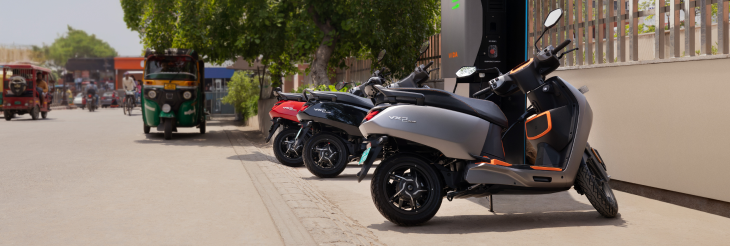
According to data reports, 43% of Indian respondents still cited a lack of public charging infrastructure as a top concern when considering an EV. Part of that concern is not just about charger count. It is about compatibility. Before standardisation, India's electric scooter market used over 10 proprietary connector types.
Light Electric Combined Charging System (LECCS) charging addresses this fragmentation. LECES is India's first indigenous combined AC/DC standard for electric two-wheelers and three-wheelers, now an official BIS standard under IS 17017. Here’s what every current and prospective EV rider needs to know about it.
Understanding LECCS: The Foundation of India's Light EV Revolution
LECCS, or Light Electric Combined Charging System, is India's first indigenously developed charging connector standard for electric two-wheelers, three-wheelers, and micro four-wheelers, published by BIS in October 2023 as Indian Standard IS 17017 (Part 2/Section 7). An additional specification, IS 17017 Part 31:2024, followed in February 2024.
Before LECCS, India's electric scooter market relied on more than 10 proprietary connector types. If you owned one brand's scooter, you could only charge at that brand's stations. Public fast-charging infrastructure could not scale because charger operators had to support multiple incompatible designs.
LECCS was developed collaboratively by NITI Aayog, the Department of Science and Technology (DST), the Automotive Research Association of India (ARAI), EV manufacturers, and BIS. The standard was built on an open-source connector design offered freely to the industry in 2021. The result is a unified connector that any compliant vehicle can use at any compliant charging station, regardless of brand.
Technical Specifications of LECCS Charging: Power, Voltage and Capabilities
The LECCS connector, officially designated as the Type 7 connector under IS 17017, supports both AC and DC charging through a single compact interface. It is sized specifically for the lower voltage and smaller form factor of two-wheelers and three-wheelers.
Key specifications of the LECCS charging standard include the following.
AC charging capacity: Up to 7 kW at 240 V and 32 A, suitable for slow home or workplace charging.
DC fast charging capacity: Up to 12 kW at 120 V and 100 A, designed for public fast-charging stations.
Connector design: Seven contact pins combining power delivery and communication channels in a compact layout.
Communication protocol: CAN bus for real-time data exchange between the vehicle's battery management system and the charger, following an initial control pilot handshake.
Safety feature: An energised latching system on the vehicle-side inlet secures the connection during charging.
A single LECCS port on your electric scooter can accept both a slow overnight charge at home and a rapid DC top-up at a public station.
How LECCS Differs From Other EV Charging Standards
LECCS is one of several EV charging standards used in India, but it is the only one designed as a combined AC/DC solution for light electric vehicles. The table below compares the three most relevant standards for the two-wheeler and three-wheeler segments.
| Feature | LECCS (Type 7) | Type 6 (LEVDC) | CCS2 |
| Charging type | Combined AC + DC | DC only | Combined AC + DC |
| Target vehicles | 2W, 3W, micro 4W | 2W, 3W | 4W (cars) |
| AC power | Up to 7 kW | Not supported | Up to 22 kW |
| DC power | Up to 12 kW | Up to 12 kW | 50–350 kW |
| Connector size | Compact, lightweight | Compact | Large, heavy |
| BIS standard | IS 17017 Part 2/Sec 7 | IS 17017 Part 2/Sec 6 | IS 17017 Part 2/Sec 5 |
| Government backing | Long-term standard | Interim standard | Standard for 4W |
CCS2 is too large, heavy, and high-powered for electric scooters. Type 6 handles DC fast charging well but lacks AC capability, limiting its flexibility for home setups. LECCS bridges both in one connector, which is why BIS and government agencies position it as the long-term standard for India's light EV segment.
LECCS-Compatible Vehicles: Which Electric Scooters and Three-Wheelers Support This Standard?
The LECCS standard is compatible with the vast majority of India's electric two-wheelers. Multiple OEMs have adopted the Type 7 connector since its BIS approval, and that number continues to grow as the standard gains traction across the industry.
Multiple OEMs and charging operators have adopted LECCS, making cross-brand charging a practical reality. Charging operators now offer 3 kW, 6 kW, and 12 kW LECCS-compatible fast chargers, and several are visible on Google Maps for easy discoverability.
VIDA, powered by Hero MotoCorp, operates one of India's widest fast-charging networks for electric two-wheelers, with 5,900+ stations across 450 cities. VIDA's three-method charging approach, which includes direct vehicle charging, removable battery charging at any standard 5A home socket, and access to the fast-charging network, aligns with the interoperability goals that LECCS was built to serve.
Finding LECCS Charging Stations Across India
LECCS-equipped fast chargers are now available in 395+ cities across India, including metro areas, Tier 2 and Tier 3 towns, and intercity highway routes. Cities such as Bengaluru, Pune, Chennai, Delhi, Hyderabad, and Mumbai each have over 100 LECCS-compatible public fast chargers. States with the densest coverage include Karnataka, Maharashtra, Tamil Nadu, Kerala, and Gujarat.
Smaller cities are also catching up. Locations in Kozhikode, Coimbatore, Nashik, and Indore already have 45–65+ public fast chargers each. VIDA's fast-charging network adds further coverage, with the VIDA VX2 Go 3.4 kWh and other models giving riders access to charging infrastructure across these cities. Most LECCS chargers are listed on Google Maps, so locating one is as simple as searching for EV charging near your location.
| Did you know? |
| India's electric two-wheeler sector used more than 10 proprietary charging connectors before LECCS was standardised. The LECCS connector's seven-pin design supports both AC home charging and DC fast charging through a single port, and the standard was developed collaboratively by NITI Aayog, DST, ARAI, and BIS. The open-source approach behind the connector's design ensures that no single manufacturer controls the technology, keeping the entire ecosystem accessible for riders, charger operators, and vehicle manufacturers alike. |
LECCS Charging Time: What to Expect
A typical electric scooter connected to a LECCS DC fast charger reaches 80 per cent capacity in under an hour. At higher power levels (6–12 kW), some configurations can add roughly 15 km of range in just 10 minutes, making quick mid-ride top-ups practical for urban commuters.
Charging time depends on three factors. The charger's power output (3 kW, 6 kW, or 12 kW) determines how fast energy flows. Your vehicle's battery capacity and its onboard battery management system set the upper limit on how much current the scooter can accept. Temperature and existing charge level also influence speed, as most systems slow the rate above 80 per cent to protect battery health.
AC charging through a LECCS port at home is slower, typically taking 4–6 hours for a full charge, making overnight charging a practical routine.
Installing LECCS Chargers: Home and Commercial Options
For AC charging, a LECCS-compatible setup at home is straightforward. Most electric scooters with LECCS ports ship with a portable charger that plugs into a standard household socket. No special wiring, no electrician visit, no infrastructure upgrade.
Higher-power DC LECCS chargers (3 kW and above) require a dedicated electrical connection, adequate wiring capacity, and professional installation to ensure compliance with safety standards. Apartment residents should coordinate with their housing society, as some states now mandate EV charging provisions in residential complexes. Commercial establishments such as malls, office parks, and fuel stations are also increasingly installing LECCS-compatible chargers under PM E-DRIVE subsidy provisions.
The Future of LECCS: Government Initiatives and Infrastructure Roadmap
The central government's PM E-DRIVE scheme has allocated ₹2,000 crore specifically for public EV charging infrastructure. Of the scheme's targeted 72,300 charging stations, 48,400 are designated for electric two-wheelers and three-wheelers, the exact segment LECCS was designed to serve.
The government is also developing the Unified Bharat eCharge (UBC) platform, a digital system that would let EV riders locate, access, and pay for charging across operator networks through a single application. Combined with LECCS hardware standardisation, UBC would also make the software layer interoperable, so your charging experience stays consistent whether you charge in Bengaluru, Jaipur, or on a national highway.
Conclusion
LECCS is one of those infrastructure developments that works best when you do not have to think about it. You pull up, plug in, and charge, regardless of your scooter brand or the charger operator's name. That kind of simplicity was missing from India's light EV ecosystem until the Type 7 connector gave every stakeholder a common standard to build on.
As the charging network grows and government-backed platforms like Unified Bharat eCharge take shape, the experience of owning and riding an electric scooter in India is set to become markedly smoother. LECCS is the connector standard making that possible, one plug at a time.
FAQs
1. What does LECCS stand for?
LECCS stands for Light Electric Combined Charging System. It is India's first indigenously developed combined AC and DC charging standard for light electric vehicles, including two-wheelers, three-wheelers, and micro four-wheelers.
2. Can LECCS chargers work with electric cars?
LECCS is designed specifically for light electric vehicles. Electric cars in India use CCS2 connectors, which support much higher power levels (50–350 kW). The LECCS connector's compact size and lower voltage range (up to 120 V DC) make it unsuitable for passenger cars but well optimised for scooters and three-wheelers.
3. How long does it take to charge using a LECCS charger?
DC fast charging through LECCS typically brings a standard electric scooter battery to 80 per cent in under an hour. At 6–12 kW, some setups add roughly 15 km of range in 10 minutes. AC home charging through the same port takes 4–6 hours for a full charge, depending on battery capacity.
4. Where can I find LECCS charging stations in India?
LECCS-compatible fast chargers are available across 395+ cities in India. Bengaluru, Pune, Chennai, Delhi, Hyderabad, and Mumbai each have over 100 stations. Most LECCS chargers are listed on Google Maps, and several Indian charging apps aggregate compatible stations into a single searchable interface.
5. Are all VIDA scooters compatible with LECCS charging?
VIDA scooters support DC fast charging through the VIDA fast-charging network, which spans 5,600+ stations across 415 cities. VIDA's charging ecosystem also includes direct vehicle charging and removable battery charging at any standard 5A home socket, giving riders three flexible ways to charge.
6. How much does it cost to charge at a LECCS station?
Charging session pricing at LECCS stations varies by operator, power level, and location. Most public charging operators display real-time tariff information on their apps before you start a session. You can check the specific operator's app or the charging station display for current rates in your city.
7. Can I install a LECCS charger at home?
AC charging at home requires only a standard household socket and the portable charger supplied with your electric scooter. DC LECCS chargers (3 kW and above) need a dedicated electrical connection and professional installation. Several state EV policies now mandate charging provisions in residential complexes, making home installation easier for apartment residents.
8. What is the difference between 3 kW, 6 kW, and 12 kW LECCS chargers?
The difference is in power output and charging speed. A 3 kW LECCS charger delivers a slower, steadier charge suited for locations where vehicles are parked for longer periods. A 6 kW charger roughly halves that time, making it practical for commercial parking areas and workplaces. A 12 kW charger is the fastest option under the LECCS standard, capable of adding significant range in just 10–15 minutes, ideal for public fast-charging stations along commute routes.