What Is the Cost of EV Charging in India? A Full 2026 Guide
Published by VIDA
Read Time: 1 min 30 sec
Date: 30th June 26
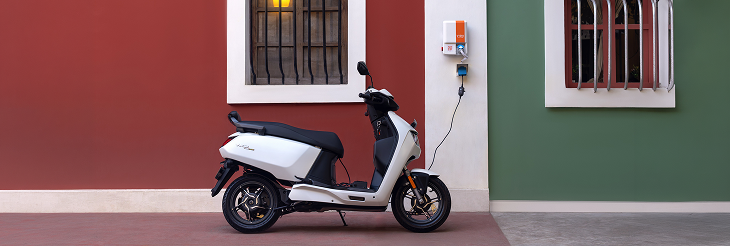
India's public EV charging network has expanded to over 29,151 stations (as of December 2025), up from roughly 5,000 in 2022. With more chargers on the ground than ever, the question is no longer whether you can charge, but what it will cost you.
The answer depends on your state, your charger type, and your usage patterns. For commuters in cities such as Delhi, Bengaluru, or Hyderabad, knowing these numbers can help you estimate how much you would need to spend each month.
Understanding EV Charging Costs: Key Terms Explained
Before comparing tariffs and charger types, a few terms are worth knowing. A kilowatt-hour (kWh) is the standard unit of electricity. One kWh equals one unit on your electricity bill. Your DISCOM (Distribution Company) is the local utility that sets your tariff and sends your monthly bill.
Tariff slabs determine what you pay per unit based on total monthly consumption. The more units you use, the higher the per-unit rate in most states. EV charging adds to your household consumption, which can push you into a higher slab.
AC charging (alternating current) is slower and typically used at home or at public slow chargers. DC charging (direct current) is faster and used at public fast-charging stations, but costs more per kWh. Understanding this difference is key to managing your monthly charging budget.
What Is the Cost of EV Charging at Home in India?
Home charging is the most affordable way to charge an electric vehicle in India. Domestic electricity tariffs in most states range from ₹3 to ₹10 per unit, depending on your DISCOM and consumption slab. For electric scooter owners, a full home charge rarely crosses ₹30–50, given the smaller battery sizes involved.
Your actual cost depends on your state's domestic tariff slab and the total amount of electricity your household consumes each month. If your household already uses 300+ units per month, adding EV charging could push you into a higher billing tier.
Scooters with removable batteries make home charging especially straightforward. You can detach the battery, carry it indoors, and plug it into any standard 5A socket. No dedicated charging setup or wiring changes needed. The VIDA VX2 Go, for example, charges from 0–80% in under 3 hours at home, using the same socket that powers your phone charger.
Home Charging Installation Costs in India
For most electric two-wheeler owners, home charging requires no special installation. A standard 5A household socket is all you need. Removable battery scooters let you simply carry the battery inside and plug it in, skipping any wiring work entirely.
If you prefer a wall-mounted Level 2 charger, installation costs vary based on your existing wiring, the charger brand, and whether your electrician needs to upgrade the circuit. Some DISCOMs offer simplified EV-only meter connections with dedicated tariffs, which keep your charging consumption separate from your household bill.
Homeowners can use existing meters or apply for a separate EV-dedicated meter and tariff. Distribution companies must approve any load increase required for home EV charging.
What Is the Cost of Public Charging Stations in India?
Public EV charging stations in India typically charge ₹8–15 per kWh for AC slow chargers and ₹15–25 per kWh for DC fast chargers. These rates are set by individual Charge Point Operators and include the electricity tariff, operator service charge, and GST.
Many factors influence what you pay at a public station.
Location: A charger at a highway rest stop often costs more than one in a city centre.
Charger speed: Higher-kW DC chargers command a premium for faster turnaround.
VIDA operates 5,600+ fast-charging stations across 415 cities, with a full charge in approximately 62 minutes. Its fast-charging network gives riders wide coverage for longer trips and on-the-go top-ups.
Free Charging Stations and Promotional Offers
Some Charge Point Operators and EV brands offer free or discounted charging sessions during launch periods, festive seasons, or as part of ownership packages. Government-supported stations, particularly those set up under PM E-DRIVE at public bus depots and municipal parking lots, sometimes offer lower tariffs than private operators.
These promotions vary by city and operator, so checking your charging app before each session is worthwhile. Some ownership plans also bundle a fixed number of free fast-charging sessions for the first year.
Home vs. Public Charging: Complete Cost Comparison
Home and public charging differ across cost, speed, and convenience. The table below puts them side by side for a clear comparison.
| Factor | Home Charging | Public AC Charging | Public DC Fast Charging |
| Typical rate per kWh | ₹4–₹10 | ₹8–₹15 | ₹15–₹25 |
| Charging speed | Slower (3–6 hours) | Moderate (2–4 hours) | Fastest (under 90 minutes) |
| Convenience | Overnight, at home | Requires travel to the station | Requires travel to the station |
| Additional fees | None (part of domestic bill) | Service charge + 5% GST | Service charge + 5% GST |
| Availability | Any 5A household socket | Station locations only | Station locations only |
For daily commuters, home charging covers most needs at the lowest cost per kWh. Public fast charging works well for longer trips or for a quick top-up during the day.
How to Calculate Your EV Charging Costs
Calculating your monthly charging cost takes three numbers: your battery capacity in kWh, your per-unit electricity rate, and the distance you cover each month. Divide your monthly distance by your scooter's real-world range per charge, multiply by battery capacity to get total kWh consumed, then multiply by your tariff.
For example, a rider covering 900 km per month on a scooter with a 3.4 kWh battery and a real-world range of 100 km needs about 9 full charges. That is roughly 30.6 kWh of electricity. At ₹6 per unit, the monthly cost lands at about ₹184.
Factor in 10–15% charging efficiency losses for a more accurate estimate. If your scooter draws 30.6 kWh in a month, your actual grid consumption will be closer to 34–35 kWh.
Ways to Reduce Your EV Charging Costs in India
The most effective way to keep your EV charging cost low is to charge at home during off-peak hours. Beyond that, a few practical habits make a measurable difference.
Charge overnight at home whenever possible. Home tariffs are lower than public station rates, and off-peak windows reduce them further.
Monitor your total household consumption. Staying within a lower tariff slab keeps your per-unit rate down. A dedicated EV meter separates your charging load from household usage.
Use energy-efficient ride modes for daily commutes. Eco and Ride modes on most electric scooters draw less energy per kilometre, reducing how frequently you need to charge.
Take advantage of regenerative braking. Every bit of energy recovered during braking feeds back into the battery, lowering your net consumption over a month.
Apply for a dedicated EV tariff if your state offers one. Several DISCOMs now provide concessional EV rates well below standard domestic slabs.
These habits are easier to maintain on scooters that offer genuine charging flexibility. VIDA, powered by Hero MotoCorp, builds its entire lineup around three charging methods: direct vehicle charging, removable battery charging at any standard 5A household socket, and access to a fast-charging network spanning 5,600+ stations across 415 cities. That shared-socket design (the same socket works for the scooter and the detached battery) removes the need for extra adaptors or electrical upgrades.
VIDA's running cost of ₹0.17 per km reflects what these charging efficiencies look like in daily practice.
State-Wise EV Charging Cost Analysis for India
India does not have a single national EV charging tariff. Each State Electricity Regulatory Commission (SERC) sets its own rate. The Bureau of Energy Efficiency publishes a consolidated list of state-wise EV tariffs, summarised below.
| State | EV Tariff (₹/kWh) | Fixed Charge |
| Delhi | 4.50 (LT), 4.00 (HT) | Nil |
| Gujarat | 4.10 (LT), 4.00 (HT) | ₹25/installation/month |
| Karnataka | 5.00 | ₹70–₹170/kW |
| Kerala | 5.50 (LT), 6.00 (HT) | ₹90/kW |
| Uttar Pradesh | 5.50 | Varies |
| Maharashtra | 6.08 (LT), 6.90 (HT) | ₹75/kW |
| Madhya Pradesh | 6.79 (LT), 6.96 (HT) | Nil |
| Haryana | 6.62 (LT), 6.22 (HT) | Nil |
LT = Low Tension (domestic/small commercial). HT = High Tension (large commercial).
States like Delhi and Gujarat offer some of the lowest dedicated EV tariffs in the country. If your state does not appear here, check your SERC's latest tariff order or the e-AMRIT portal for updated rates.
Understanding Time-of-Use Tariffs for EV Charging
Several Indian states, including Delhi, Maharashtra, Uttar Pradesh, and Telangana, now offer time-of-use (ToU) tariffs that adjust electricity rates based on the time of day. Charging during off-peak hours (typically 10 PM–6 AM) can lower your per-unit cost by 20–30% compared to peak evening rates between 6 PM and 10 PM.
Peak hours coincide with high household demand, when DISCOMs charge a premium. Solar hours (roughly 9 AM–5 PM) often carry moderate rates. Overnight charging avoids both peaks, making it the most cost-effective window for most EV owners.
If your DISCOM supports ToU metering, scheduling your charge to start at 11 PM and finish by morning makes a measurable difference over a year. Smart chargers with scheduling features automate this process entirely. Maintaining good battery health also plays a role, as a well-maintained battery charges more efficiently and holds capacity longer.
Conclusion
EV charging costs in India are shaped by your state tariff, the charger type you use, and the time of day you plug in. Knowing your DISCOM's rate, whether a dedicated EV tariff applies, and how off-peak windows work puts you in control of your monthly expenses.
Home charging serves most daily commuters at the lowest cost per kWh, while public fast charging is a reliable option for longer trips. As more states introduce dedicated EV tariffs and time-of-use pricing, the cost of running an electric scooter is becoming increasingly transparent.
FAQs
1. What is the average cost of charging an electric vehicle in India?
Home charging typically ranges from ₹4 to ₹10 per kWh, depending on your state and tariff slab. Public AC charging costs ₹8–15 per kWh, and DC fast charging ranges from ₹15–25 per kWh. Your actual monthly spend depends on your battery size, commute distance, and how often you charge at home versus at a public station.
2. How much does it cost to fully charge an electric scooter at home?
Most electric scooters have batteries between 2 and 4 kWh. At an average domestic tariff of ₹6–8 per unit, a full home charge costs roughly ₹15–30. This covers a real-world range of 60–100 km depending on the model, riding conditions, and selected ride mode.
3. Is home charging cheaper than public charging stations in India?
Yes. Home charging rates are consistently lower than public station rates across all Indian states. Domestic tariffs start at ₹3.50–5 per kWh in the lowest slabs, while public fast chargers charge ₹15–25 per kWh. Home charging also avoids the service charges and GST that public operators add to their bills.
4. How much does DC fast charging cost in India?
DC fast charging in India typically costs between ₹15 and ₹25 per kWh, depending on the operator, location, and charger speed. Highway stations tend to charge more than city-based ones. This rate includes the electricity tariff, operator service charge, and 5% GST.
5. What is the monthly cost of charging an electric scooter in India?
For a rider covering 800–1,000 km per month on an electric scooter with a 3.4 kWh battery and a real-world range of 100 km, monthly home charging costs fall between ₹150 and ₹300, depending on the state tariff. Riders who rely more on public fast charging can expect higher monthly expenses, typically ₹400–₹800. The exact figure depends on your commute distance, charging mix, and local electricity rates.
6. How does EV charging cost compare to other transport running costs in India?
Electric vehicles are among the most affordable options for daily commuting when charged at home. Home charging typically costs ₹0.50–₹1.50 per kilometre, depending on your state tariff and the scooter's efficiency. Public DC fast charging pushes that figure to ₹1.50–₹3 per kilometre. These running costs are shaped by your battery capacity, electricity rate, and how frequently you rely on public stations versus home charging.
7. How much does it cost to install a home EV charger in India?
For electric two-wheelers, home charging typically requires no installation. A standard 5A household socket is sufficient, especially for scooters with removable batteries. If you prefer a dedicated wall-mounted charger or need a separate EV meter connection, installation costs vary based on your existing wiring, the charger brand, and DISCOM requirements. Some states offer subsidies for home charger installation.
8. What is the 80% charging rule, and how does it affect costs?
Charging a lithium-ion battery to 80% instead of 100% reduces heat buildup and extends battery lifespan. The final 20% charges more slowly because the battery management system throttles input to protect cell health. Stopping at 80% also reduces energy waste due to efficiency losses during the final phase, making each charging session marginally more cost-effective. For daily commutes that do not require a full charge, the 80% habit keeps both your battery and your electricity bill in better shape.